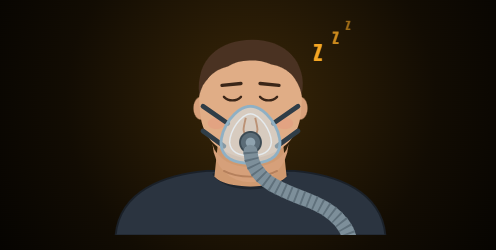
Most nights you wake up to air blowing across your eyes or you feel a cold jet hitting your neck. Sometimes your partner mentions hearing a hissing sound coming from your side of the bed. You might also notice red marks where the mask straps have been pressing too hard, since you keep tightening them to try to stop the leak. Some mornings you wake up with dry, irritated eyes from air blowing upward under the mask cushion.
Why this happens
Leaks usually come down to fit, not effort. A mask that’s the wrong size or shape for your face will leak no matter how tight you make it, and over-tightening often makes leaks worse by distorting the cushion seal instead of fixing it. Other common causes include a worn-out or stretched-out cushion, facial hair breaking the seal, sleeping on your side or stomach and shifting the mask off center, or opening your mouth at night if you’re on a nasal mask or nasal pillows. Higher pressure settings can also push more air out through small gaps, so if your pressure was recently increased, that could be part of it too.
Steps to troubleshoot
- Check the cushion for wear, cracks, or stretched silicone. Most cushions need replacing every 1 to 3 months even if they look fine, sometimes even earlier
- Try refitting the mask while lying down in your actual sleep position, not just standing in front of a mirror
- Loosen the straps first before tightening. A looser fit that seals well beats a tight fit that’s distorting the cushion
- If you sleep on your side, ask about a mask designed for side sleepers or a low-profile cushion.
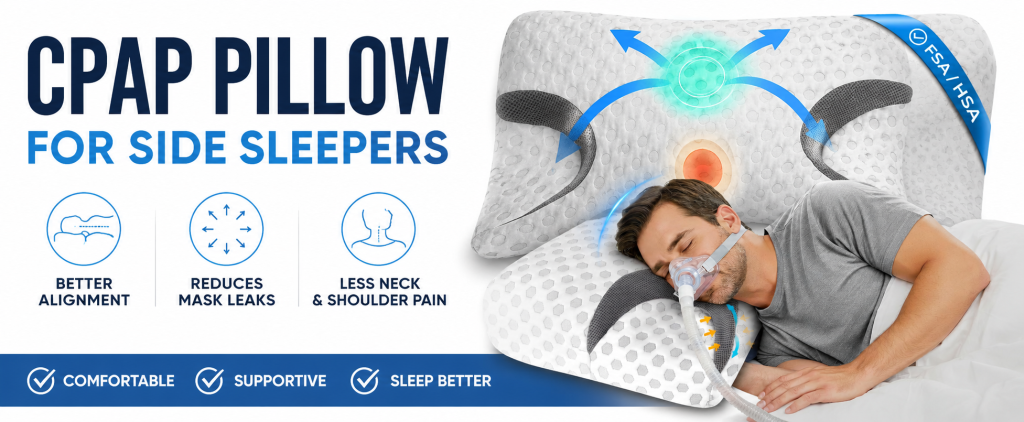
- Consider looking into a CPAP pillow made for side sleepers as well.
- If your mouth falls open at night, ask about a chin strap, mouth tape or switching to a full face mask
- Try a different mask style or size. Nasal masks tend to leak less than full face masks, so this may be worth discussing if you’re currently on a full face mask
- Wash the cushion daily with mild soap and water or CPAP wipes, since facial oils and skin care products break down the silicone seal faster
Who to talk to
Your respiratory therapist is the best first call for a hands-on refit and to try different mask sizes or styles. Your DME (durable medical equipment) supplier can pull your leak data from the machine and help you exchange your mask or cushion, often at no extra cost if you’re within your supply schedule. Your sleep doctor should be looped in if leaks continue despite refitting, since they may need to adjust your pressure setting or reassess your treatment approach.
Evidence
Leak is one of the most common problems patients report on CPAP. In a study of over 1,400 long-term CPAP users, 75.4% reported leak-related problems, making it the single most common complaint among all mask side effects. Leak also has a measurable effect on how much people use their machine. In a study of 96 patients starting auto-adjusting PAP therapy, those who did not stick with treatment had significantly higher leak levels than those who did.
References
- Rotty MC, Suehs CM, Mallet JP, et al. Mask side-effects in long-term CPAP-patients impact adherence and sleepiness: the InterfaceVent real-life study. Respir Res. 2021;22(1):17.
- Valentin A, Subramanian S, Quan SF, Berry RB, Parthasarathy S. Air leak is associated with poor adherence to autoPAP therapy. Sleep. 2011;34(6):801-806.
You wake up most mornings with a red line or patch across your nose bridge and cheeks where the mask sat all night. Sometimes it’s just redness that fades within an hour, but other mornings it’s tender to the touch, or you notice the skin feels raw. Over weeks it can turn into a small sore or chafed patch that stings when the mask presses on it again the next night, which makes you dread putting the mask back on.
Why this happens
Soreness usually comes from sustained pressure combined with friction in one spot, most often the nasal bridge, which has very little natural cushioning over the bone. This happens when the mask is over-tightened to stop a leak, when the cushion is worn out and no longer sealing the way it used to, or when facial oils build up on the cushion and cause it to slip and rub instead of sitting still. People with more delicate or sensitive skin, or those using a mask that presses directly over the bridge rather than under it, tend to notice this more.
Steps to troubleshoot
- Loosen the straps rather than tightening them if you notice soreness, since over-tightening is one of the most common causes and doesn’t actually fix a leak long term
- Wash your face before bed and clean the mask cushion daily with mild soap and water to remove oils that cause slipping and rubbing
- Try a mask liner or nasal bridge pad, which adds a soft barrier between the skin and the hard plastic frame
- Ask about a mask style that sits under the nose rather than over the bridge, such as certain nasal pillow or under-nose designs, if the bridge is your main problem spot
- Replace the cushion on schedule, since a worn cushion loses its seal and tempts you to tighten the straps further, which increases pressure on the same spot
- If a sore or tender area develops, ask about a hydrocolloid patch or CPAP-safe barrier cream to protect the area while it heals, and avoid petroleum-based products since they can break down the mask material
Who to talk to
Your respiratory therapist can check your fit technique and recommend a liner, pad, or alternative mask style suited to your skin and face shape. Your DME can help you get a properly scheduled cushion replacement and can often exchange a mask style that isn’t working for a different one. Your sleep doctor should know if soreness is severe, persistent, or turning into an open sore, since ongoing skin breakdown sometimes needs a different treatment approach or a temporary pause to let the area heal.

Evidence
Facial pressure injuries are a well documented complication of tight-fitting ventilation masks, with the nasal bridge being especially vulnerable because it has minimal soft tissue over the bone. Reviews of noninvasive ventilation interfaces, which include CPAP masks, report facial pressure injury rates ranging from roughly 10 to 25 percent depending on the population and interface type studied, with prevention strategies such as proper fit, mask liners, and protective dressings shown to reduce these injuries.
References
- Emami Zeydi A, Zare-Kaseb A, Nazari AM, Ghazanfari MJ, Sarmadi S. Mask-related pressure injury prevention associated with non-invasive ventilation: a systematic review. Int Wound J. 2024;21(6):e14909.
- Wei Y, Pei J, Yang Q, et al. The prevalence and risk factors of facial pressure injuries related to adult non-invasive ventilation equipment: a systematic review and meta-analysis. Int Wound J. 2023;20(3):621-632.
The moment the mask goes on, your chest tightens and your heart starts racing before you’ve even turned the machine on. With a full face mask covering your nose and mouth, it can feel like something is pressing in on you or blocking your ability to breathe freely, even though air is flowing normally. Some nights you tear the mask off within minutes, sometimes without fully realizing you did it, and then feel discouraged or embarrassed about needing to try again.
Why this happens
Claustrophobia with CPAP isn’t really about the mask itself, it’s about the brain interpreting having your face covered as a loss of control or a threat, which triggers a fear response before any conscious reasoning kicks in. A full face mask amplifies this because it covers more of the face and can restrict peripheral vision, which tends to intensify the confined feeling. Once this happens a few times, the brain starts to associate the mask with panic before you even put it on, which is why the reaction can show up faster and stronger over time if it isn’t addressed early.
Steps to troubleshoot
- Practice wearing the mask during the day while doing something calming, like watching TV or reading, without the machine running, for a few minutes at a time and build up gradually
- Once the daytime wear feels tolerable, add the machine on the lowest ramp setting while sitting up and awake, before ever trying to sleep in it
- Move to lying down awake with the mask and machine running only after the sitting stage feels manageable
- If a full face mask feels too confining, ask about a nasal mask or nasal pillow style, which covers less of the face and often feels less restrictive
- Look for a mask with a minimal frame, better peripheral visibility, or quick-release straps, which can reduce the trapped feeling if you do need a full face style
- If panic persists despite gradual practice, ask about a referral for cognitive behavioral therapy geared toward CPAP-related anxiety or PAP desensitization, which is a structured, evidence-based approach rather than something you have to push through alone
Who to talk to
Your respiratory therapist can walk you through a structured desensitization plan and help you find a mask style that feels less confining. Your DME can provide different mask options to try without committing to one that isn’t working. Your sleep doctor should know if the claustrophobia is significant or persistent, since they can refer you to a behavioral sleep psychologist for exposure-based therapy, which has shown meaningful improvement in adherence for patients who don’t respond to gradual self-practice alone.
Evidence
Claustrophobia is a well documented barrier to CPAP adherence. In one study of CPAP users, adherence below 2 hours per night was more than twice as common among patients with higher claustrophobia scores compared to those with lower scores.¹ Structured desensitization approaches, including nurse-led protocols and graded exposure therapy, have been shown to meaningfully increase nightly CPAP use in patients who struggled with claustrophobic reactions to the mask.
References
- Chasens ER, Pack AI, Maislin G, Dinges DF, Weaver TE. Claustrophobia and adherence to CPAP treatment. West J Nurs Res. 2005;27(3):307-321.
- Means MK, Edinger JD. Graded exposure therapy for addressing claustrophobic reactions to continuous positive airway pressure: a case series report. Behav Sleep Med. 2007;5(2):105-116.
You’re standing in front of a wall of options online or at your DME, nasal mask, nasal pillows, full face, hybrid, and nothing on the box tells you which one actually fits your life. Maybe you were handed whatever the clinic had on hand at your titration study, or a friend recommended what worked for them, but it doesn’t feel right for you. You end up guessing, and if the first guess is wrong, it can feel like the whole therapy is doomed rather than just a mismatched interface.
Why this happens
Mask type isn’t one-size-fits-all because it depends on how you breathe, how you sleep, and what pressure you’re prescribed. Nose breathers generally do best with a nasal mask or nasal pillows, while people who breathe through their mouth at night, even occasionally, need a mask that covers the mouth or a chin strap to keep it closed. Side and stomach sleepers often do better with a low-profile nasal or pillow mask since full face masks are bulkier and more likely to shift. Higher prescribed pressures also change the calculus, since some interfaces handle high pressure more comfortably than others. Without knowing these factors ahead of time, the default choice is often just whatever was in stock.
Steps to troubleshoot
- Notice whether you wake up with a dry mouth or sore throat, which usually signals mouth breathing at night and points toward a full face mask or a chin strap/mouth tape paired with a nasal interface
- Consider your sleep position, side and stomach sleepers usually do better with nasal pillows or a low-profile nasal mask rather than a full face mask
- Factor in your prescribed pressure, since oronasal and full face masks are typically better tolerated at higher pressures, while nasal masks and pillows tend to perform better and have higher adherence at lower to moderate pressures
- If you have chronic nasal congestion, allergies, or a deviated septum, a nasal-only mask may not work well for you, and a full face mask or ENT evaluation may be needed
- Ask about a trial period or fit pack that lets you test more than one style before committing
- If you’re claustrophobic, start with nasal pillows or a nasal mask, since these cover less of the face and are generally easier to tolerate than a full face mask
Who to talk to
Your respiratory therapist is the best person to match mask type to your specific breathing pattern, sleep position, and pressure setting, and can often let you trial more than one style. Your DME can supply different interfaces to test and can process exchanges if your first choice doesn’t work out. Your sleep doctor should know if you keep struggling across multiple mask types, since that can point to an underlying issue like nasal obstruction or a pressure setting that needs adjusting, which changes which mask makes sense for you.
Evidence
A large network meta-analysis pooling data from 29 studies and over 6,000 patients found that nasal masks were associated with the highest CPAP adherence and the lowest residual breathing events compared to oronasal masks, while nasal pillows ranked well but required the lowest pressures to perform best. Other research has consistently found that oronasal masks, which cover the mouth and nose, are linked to higher required pressure, more residual apnea events, and lower nightly adherence than nasal-only interfaces, reinforcing that mask type meaningfully affects how well therapy works and how likely someone is to stick with it.
References
- Chen LY, Chen YH, Hu SW, Lin MT, Lee PL, Chiang AA, Tu YK. In search of a better CPAP interface: a network meta-analysis comparing nasal masks, nasal pillows and oronasal masks. J Sleep Res. 2022;31(6):e13686.
- Andrade RGS, Viana FM, Nascimento JA, et al. Nasal vs oronasal CPAP for OSA treatment: a meta-analysis. Chest. 2018;153(3):665-674.
Every morning you catch your reflection and see deep red lines or dents running across your nose, cheeks, or forehead where the mask sat all night. Sometimes they fade within thirty minutes, but other times they linger for hours, and every visit to the mirror is a reminder of what the mask is doing to your face overnight. It’s not painful the way a sore is, but it’s discouraging, especially if it’s been happening for weeks or months and you’re starting to wonder if it’s permanent.
Why this happens
Marks and indentations come from sustained pressure holding the same shape against your skin for hours, which is different from friction-based soreness but shares the same root cause: the straps or frame pressing harder than necessary. This usually means the headgear is over-tightened, often because you tightened it to chase a leak instead of addressing the leak’s actual source, or the cushion has hardened with age and no longer distributes pressure evenly. A mask that’s technically the right size but sits with the frame’s edge directly over a bony area, like the nose bridge or cheekbone, will also leave more visible marks than one that distributes pressure across softer tissue.
Steps to troubleshoot
- Loosen the headgear until the mask barely holds a seal, then only tighten in small increments, since the goal is the lightest tension that still seals rather than maximum tightness
- Check how long the marks take to fade, marks that disappear within thirty minutes are typically just temporary pressure lines, but marks or dents that persist longer or feel tender may indicate the fit needs to change
- Replace the cushion on schedule, since hardened or worn silicone concentrates pressure instead of spreading it evenly
- Add a mask liner or gel pad at the specific pressure point, which adds a soft layer between the frame and your skin
- Try a different mask style if marks keep showing up in the same spot night after night, since some designs sit lower on the nose bridge or use a wider contact area that reduces localized pressure
- Alternate between two different mask types if you own more than one, which gives the same skin area a break rather than facing identical pressure every night
Who to talk to
Your respiratory therapist can check your current fit and adjust strap tension technique, and can recommend a liner or alternative mask design suited to where your marks are showing up. Your DME can supply a replacement cushion or a different mask style if the current one keeps leaving marks despite proper adjustment. Your sleep doctor should know if a mark turns into a persistent sore, doesn’t fade at all between uses, or becomes tender or broken skin, since that has moved beyond a cosmetic issue into something that needs closer monitoring.
Evidence
Facial marks and indentations are an early, visible sign of the same pressure mechanism that, if left unaddressed, can progress to a facial pressure injury, a well documented complication of tight-fitting ventilation masks including CPAP. Reviews of noninvasive ventilation interfaces report facial pressure injury rates ranging from roughly 10 to 25 percent depending on the population studied, with proper fit and reduced strap tension identified as key prevention strategies. Because these figures come primarily from acute hospital ventilation settings rather than home CPAP users specifically, they should be read as evidence that pressure-related skin changes are a real and studied phenomenon, not as a direct prediction of your personal risk.
References
- Emami Zeydi A, Zare-Kaseb A, Nazari AM, Ghazanfari MJ, Sarmadi S. Mask-related pressure injury prevention associated with non-invasive ventilation: a systematic review. Int Wound J. 2024;21(6):e14909.
- Wei Y, Pei J, Yang Q, et al. The prevalence and risk factors of facial pressure injuries related to adult non-invasive ventilation equipment: a systematic review and meta-analysis. Int Wound J. 2023;20(3):621-632.
You fall asleep with a good seal, but sometime in the night you roll onto your side or stomach and wake up to air blowing across your eyes, a hissing sound, or your bed partner nudging you because the mask is whistling. Sometimes you don’t wake up at all and just find out in the morning from a high leak reading on your app, or you notice you feel less rested even though you technically wore the mask all night. Either way, the mask that fit fine at bedtime clearly doesn’t stay put once you start moving.
Why this happens
Mask shifting is largely a mechanical problem, when your face presses into the pillow, the pillow pushes back against the mask frame and cushion, distorting the seal on one side while the other side loses contact entirely. This is worse with bulkier masks that have more surface area for the pillow to catch on, and worse with a standard pillow that has no space cut out for the mask or hose. Facial oils that build up over the night also make the cushion more likely to slide once pressure is applied, even if the initial fit was fine. Tubing that drags or catches when you turn can pull the mask sideways too, adding another source of movement beyond the pillow contact itself.
Steps to troubleshoot
- Fit the mask while lying down in your actual sleep position rather than sitting up, since your face shape and the pillow contact point change once you’re lying down
- If you’re a side or stomach sleeper, ask about a lower-profile mask, such as a nasal pillow or compact nasal mask, since less surface area gives the pillow less to push against
- Try a CPAP-specific pillow with cutouts designed to relieve pressure on the mask and hose, which reduces the direct contact that causes shifting
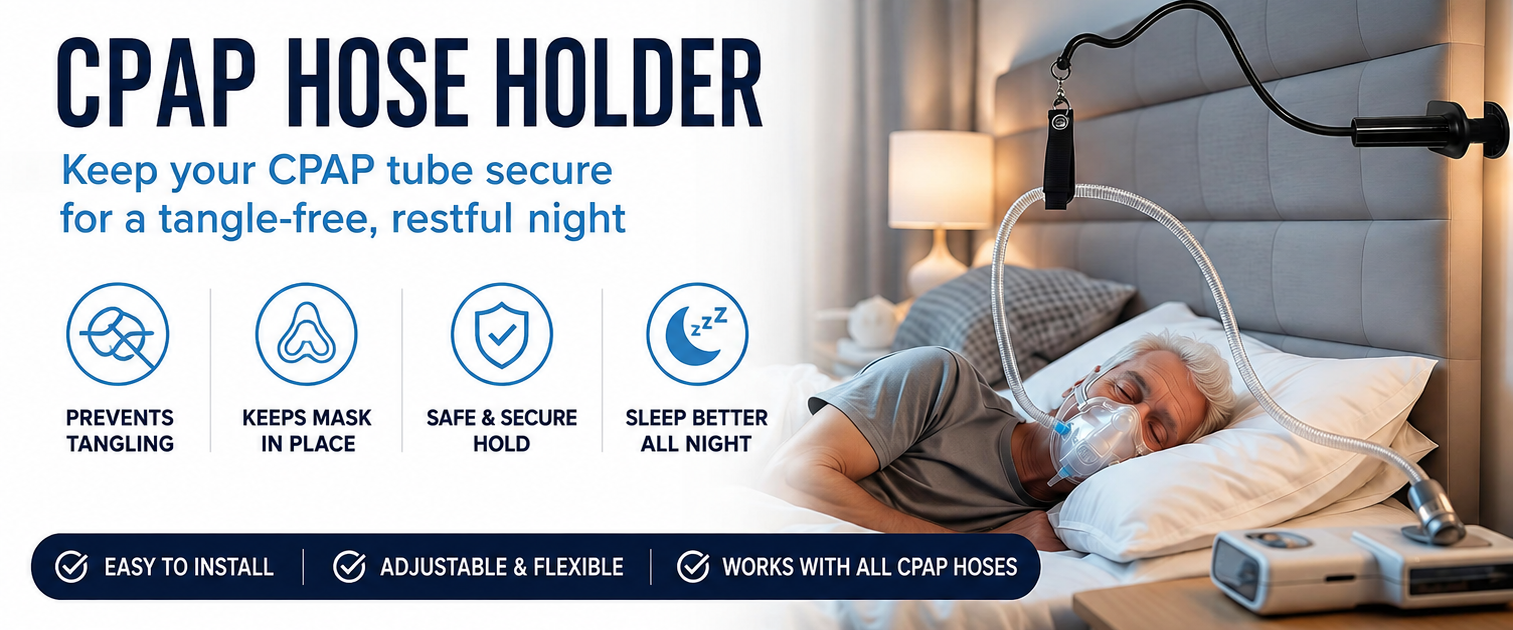
- Route the tubing so it comes from the top of your head rather than the front, if your mask style allows it, to reduce tugging when you roll over
- Clean the cushion daily to remove facial oils that make the seal more likely to slip under pressure
- Replace the cushion on schedule, since a worn cushion is more prone to shifting even with a good pillow setup
Who to talk to
Your respiratory therapist can refit you in your actual sleep position and recommend a mask style built for side or stomach sleeping. Your DME can supply a lower-profile mask or a CPAP pillow if your current setup isn’t holding up through the night. Your sleep doctor should know if the leak from shifting is significant or if it’s affecting your therapy data, since persistent high leak numbers can mean the pressure isn’t being delivered consistently even if you’re wearing the mask the full night.
Evidence
Mask-related leak, which includes leak triggered by movement and shifting, is the most commonly reported side effect among long-term CPAP users, and it has been independently associated with lower nightly adherence. Research comparing mask types has found that interfaces with smaller facial contact area, such as nasal and nasal pillow masks, are associated with better therapy tolerance than bulkier oronasal designs, which supports the practical guidance that a lower-profile mask reduces the surface area available for a pillow to disrupt during movement.
References
- Rotty MC, Suehs CM, Mallet JP, et al. Mask side-effects in long-term CPAP-patients impact adherence and sleepiness: the InterfaceVent real-life study. Respir Res. 2021;22(1):17.
- Borel JC, Tamisier R, Dias-Domingos S, et al. Type of mask may impact on continuous positive airway pressure adherence in apneic patients. PLoS One. 2013;8(5):e64382.
Every breath out feels like you’re pushing against a wall of air instead of just letting it flow naturally. It’s the opposite of what your body expects, normally exhaling is passive and effortless, but with the machine running you have to actively work to push air out. Some nights this feeling is what keeps you tossing and turning, or makes you pull the mask off mid-sleep because it feels like you’re fighting the machine instead of breathing with it.
Why this happens
CPAP delivers one constant pressure throughout the whole breath, both in and out, which is different from how your lungs normally work. Exhaling against a fixed pressure requires more muscular effort than exhaling into open air, and this sensation tends to be most noticeable at higher prescribed pressures, since the resistance you’re pushing against scales with the pressure setting. It’s also more noticeable early in therapy before your body has had a chance to adapt to the new breathing pattern, though for some people it remains a persistent complaint even after weeks of use.
Steps to troubleshoot
- Ask about expiratory pressure relief, called EPR on ResMed machines or C-Flex or Flex on Philips machines, which briefly lowers the pressure right as you start to exhale and brings it back up before your next inhale
- Start at a lower relief setting and adjust gradually, since higher settings ease the sensation more but can slightly reduce how effectively the pressure holds your airway open at that moment
- Use the ramp feature at the start of the night, which begins at a lower pressure and increases gradually, giving you time to adjust before reaching the full prescribed setting
- Practice wearing the mask and machine while awake and sitting up before trying to sleep in it, so the exhale sensation feels familiar rather than alarming when you’re trying to fall asleep
- If the feeling doesn’t improve despite pressure relief settings, ask whether your current pressure is higher than necessary, since a pressure recheck sometimes finds room to adjust
- If you’re on a fixed CPAP and still struggle significantly, ask whether an auto-adjusting machine or a different pressure delivery mode might suit you better (like BPAP or ASV)
Who to talk to
Your respiratory therapist can turn on and fine-tune pressure relief settings and walk you through daytime practice to build tolerance. Your DME can confirm which comfort features your specific machine supports and help you adjust them. Your sleep doctor should be looped in if the discomfort doesn’t improve with these adjustments, since they may want to reassess your prescribed pressure or discuss whether a different therapy mode, such as bilevel, is a better fit for you.
Evidence
Expiratory pressure relief was developed specifically to address the sensation of exhaling against incoming pressure, and one crossover trial found patients expressed a preference for pressure relief over standard fixed CPAP, though the improvement in comfort scores did not reach statistical significance in that particular study. It’s worth knowing that pressure relief isn’t without tradeoffs: bench modeling has shown that higher relief settings can, in some cases, drop the effective pressure enough that it no longer fully controls the underlying breathing events it’s meant to treat, which is why relief level should be set and reviewed with your care team rather than maximized on your own.
References
- Mulgrew AT, Cheema R, Fleetham J, Ryan CF, Ayas NT. Efficacy and patient satisfaction with autoadjusting CPAP with variable expiratory pressure vs standard CPAP: a two-night randomized crossover trial. Sleep Breath. 2007;11(1):31-37.
- Zhu K, Aouf S, Roisman G, et al. Pressure-relief features of fixed and autotitrating continuous positive airway pressure may impair their efficacy: evaluation with a respiratory bench model. J Clin Sleep Med. 2016;12(3):385-392.
You wake up feeling puffed up in the stomach, sometimes with cramping, burping, or gas that wasn’t there before you started using the mask. It can feel uncomfortable enough to disrupt your sleep on its own, and it’s confusing at first because it doesn’t feel connected to breathing at all, just an unexpected stomach problem showing up alongside a breathing device. For some people it’s mild and occasional, for others it’s a nightly nuisance that makes them want to skip the mask altogether.
Why this happens
This is called aerophagia, and it happens when some of the pressurized air goes down your esophagus into your stomach instead of staying in your airway. It’s more likely at higher pressure settings, since a bigger pressure gradient pushes more air toward the esophagus, and it tends to be more common with full face or oronasal masks compared to nasal-only masks. Sleeping on your back can make it worse too, since that position makes it easier for air to enter the esophagus. Some people are also just more prone to it because of how their esophageal sphincter functions, independent of the mask or pressure itself.
Steps to troubleshoot
- Try sleeping on your side instead of your back if you aren’t already, since back sleeping is associated with more aerophagia
- Ask about switching to a nasal mask or nasal pillows if you’re currently on a full face mask, since aerophagia is reported more often with masks that cover the mouth
- Ask whether your pressure setting could be reviewed, since higher pressures are more likely to push air into the stomach
- Ask about switching from fixed CPAP to an auto-adjusting machine (APAP), which lowers the average pressure delivered over the night and has been shown to reduce bloating, gas, and belching symptoms in people who experience aerophagia
- Avoid eating heavy meals, carbonated drinks, or chewing gum right before bed, since these add to air already in your digestive tract
- Track whether the bloating happens more on certain nights or positions, and bring that pattern to your next follow-up, since it helps pinpoint whether it’s pressure, mask type, or sleep position driving it
Who to talk to
Your respiratory therapist can review your mask type and sleep position habits and suggest adjustments most likely to help. Your DME can facilitate a mask change if switching from a full face to a nasal interface seems like the right move. Your sleep doctor should be involved in any decision to lower your pressure or switch to an auto-adjusting machine, since these changes need to be balanced against keeping your sleep apnea adequately treated, and they can also rule out an unrelated digestive issue if the bloating doesn’t track with CPAP use.
Evidence
A randomized crossover trial in patients who reported aerophagia on fixed CPAP found that switching to an auto-adjusting machine significantly reduced bloating, the worst episodes of bloating, flatulence, and belching, without a difference in nightly usage between the two modes.¹ Real-world data has also identified oronasal or full face mask use and reduced sleep quality as being connected to aerophagia, and even though it’s often under-recognized, it has been linked to reduced nightly CPAP use in affected patients.²
References
- Shirlaw T, Hanssen K, Duce B, Hukins C. A randomized crossover trial comparing autotitrating and continuous positive airway pressure in subjects with symptoms of aerophagia: effects on compliance and subjective symptoms. J Clin Sleep Med. 2017;13(7):881-888.
- Rotty MC, et al. Positive airway pressure-related aerophagia in obstructive sleep apnea: results from the InterfaceVent real-life study. [journal citation pending final source confirmation]
The moment the machine starts, the incoming air feels like a forceful blast rather than a gentle stream. It might feel like you’re being force-fed air, or like you can’t get comfortable no matter how you position yourself, and it can make falling asleep feel like an uphill battle. Some people describe it as feeling like they’re sticking their head out a car window at highway speed. This is different from the exhale-specific struggle, it’s the overall sensation of the pressure itself feeling like too much, night after night.
Why this happens
Your prescribed pressure is set based on what’s needed to keep your airway open during a titration study, but that number can end up feeling too high for a few reasons. Sometimes it genuinely is higher than necessary, especially if your weight, alcohol use, sleep position, or nasal congestion has changed since your original titration. Sometimes a mask leak tricks the machine into raising pressure to compensate for air it thinks isn’t reaching you, so the pressure climbs even though your actual airway needs are being met. And sometimes the pressure is correctly set for your condition, but the sensation of any amount of forced air is still something your body needs time to adjust to.
Steps to troubleshoot
- Turn on the ramp feature if it’s not already active, so the machine starts at a lower, more tolerable pressure and increases gradually while you fall asleep
- Ask about expiratory pressure relief, which reduces pressure specifically as you breathe out, and try adjusting the level rather than assuming a higher setting is always better
- Check your leak data with your provider, since chronic leak can push an auto-adjusting machine to deliver higher pressure than you actually need
- Ask about switching from fixed CPAP to an auto-adjusting machine (APAP) if you’re not already on one, since it delivers only the pressure required moment to moment instead of one constant high number all night
- Bring up whether your prescribed pressure still matches your current weight, alcohol habits, and sleep position, since these can shift what pressure you actually need over time
- If discomfort is severe and persistent despite these adjustments, ask whether a repeat titration study or a switch to bilevel therapy makes sense for you
Who to talk to
Your respiratory therapist can turn on ramp and pressure relief settings and review your leak data to see if that’s inflating your delivered pressure. Your DME can help facilitate a switch to an auto-adjusting machine if that seems like the right next step. Your sleep doctor should be the one to decide whether your prescribed pressure needs to be reassessed or whether a repeat titration or bilevel therapy is warranted, since changing the actual prescribed pressure is a medical decision that needs to balance comfort against keeping your sleep apnea adequately treated.
Evidence
It’s worth setting expectations honestly here: a recent large meta-analysis pooling 21 studies and over 1,400 patients found that pressure support features like bilevel therapy and expiratory pressure relief did not significantly improve nightly CPAP adherence compared to standard fixed pressure, though a subgroup of patients who specifically struggled with pressure intolerance did show a meaningful adherence benefit from bilevel therapy.¹ Separately, bench testing has shown that pressure relief settings, when turned up too high, can sometimes drop the effective pressure below what’s needed to fully control the underlying breathing events, which is why any pressure adjustment should be reviewed with your care team rather than maximized on your own.²
References
- Messineo L, Bakker J, Noah W, White D. 0596 Pressure support does not lead to increased treatment adherence versus CPAP: a systematic review and meta-analysis. Sleep. 2026;49(Suppl 1):A265.
- Zhu K, Aouf S, Roisman G, et al. Pressure-relief features of fixed and autotitrating continuous positive airway pressure may impair their efficacy: evaluation with a respiratory bench model. J Clin Sleep Med. 2016;12(3):385-392.
You wear the mask all night, do everything right, and still jolt awake gasping or choking, the same startling sensation you may have had before you ever started CPAP. It’s discouraging and a little alarming, since the whole point of the machine is to stop that from happening. You might also notice you’re still snoring loudly, waking up as tired as before treatment, or your bed partner tells you they still hear you struggling to breathe at night.
Why this happens
Waking up gasping despite CPAP usually means your airway is still collapsing, which points to the pressure not being high enough to keep it open. This can happen for a few different reasons. Your original prescribed pressure may genuinely be too low if your weight, alcohol intake, sleep position, or nasal congestion has changed since your titration. Mask leak can also be a hidden factor working in the opposite direction you’d expect, a chronic leak can distort what the device reports and, depending on the machine and mode, sometimes mask real events from being detected or corrected. And on rare occasions, the events causing the gasping are central rather than obstructive, meaning the brain briefly stops signaling you to breathe, which pressure changes alone don’t fully resolve.
Steps to troubleshoot
- Check your machine’s residual AHI data with your provider, since a number consistently above 5 events per hour signals your current pressure isn’t adequately controlling the underlying breathing events
- Review your leak data at the same time, since high leak nights can distort both your true pressure delivery and how reliably the device is even detecting events that night
- Don’t try to manually increase your own pressure setting, since going too high without proper reassessment can introduce new problems like aerophagia or treatment-emergent central events
- Ask whether a repeat titration study makes sense, especially if it’s been a while since your last one or your weight, alcohol habits, or nasal breathing have changed
- Mention any snoring, gasping, or choking your bed partner has noticed, since that outside observation is often more reliable than what you remember yourself
- If gasping continues despite an adequate pressure and low leak, ask your sleep doctor whether the events look central rather than obstructive, since that changes the treatment approach
Who to talk to
Your respiratory therapist can pull your leak and residual event data and flag anything that stands out before your next doctor visit. Your DME can help troubleshoot equipment issues that might be corrupting your data, like a worn cushion or improper mask fit. Your sleep doctor is the one who should actually adjust your prescribed pressure or order a repeat titration, since undertreated sleep apnea has real health consequences and this isn’t something to guess at on your own.
Evidence
Research using overnight device data has found that residual respiratory events remain common even in patients using CPAP consistently, and that automated detection can under-report the true number of events, particularly when a high central apnea index is present at baseline.¹ Separately, research on air leak has shown that a large leak can corrupt the flow signal CPAP devices use to detect breathing events, meaning a night with heavy leak can show a falsely reassuring low event count even though real obstructive events are still occurring and simply going uncounted.² This is part of why waking up gasping deserves a direct conversation with your provider rather than assuming the reported numbers on your app tell the whole story.
References
- Reiter J, Zleik B, Bazalakova M, Mehta P, Thomas RJ. Residual events during use of CPAP: prevalence, predictors, and detection accuracy. J Clin Sleep Med. 2016;12(8):1153-1158.
- Martinot JB, Hostaux L, Malhotra A, Hwang D, Pépin JL. Air leak phenotyping by mandibular jaw movement analysis in CPAP therapy: key insights for practitioners. Respirol Case Rep. 2024;12(10):e70030.
You wake up with your mouth tacky, your throat scratchy, and sometimes you need a big drink of water before you can even talk. It’s not just uncomfortable, some mornings your throat is sore enough that swallowing feels rough for the first hour or two. If it happens most nights, it can start to feel like the price of admission for using CPAP, even though it wasn’t a problem before you started therapy.
Why this happens
The steady stream of pressurized air moves faster and drier than normal breathing, which pulls moisture out of your mouth and throat tissue over the course of the night. This is worse if your mouth falls open during sleep, since an open-mouth leak lets a continuous draft of dry air wash directly across your throat, even if you’re technically wearing a nasal mask. It can also be worse at higher pressure settings, in colder or drier climates, and in winter months when indoor heating drops ambient humidity even further. Without a humidifier in the loop, the air reaching you is essentially dry no matter how well the rest of your setup is working.
Steps to troubleshoot
- Turn on heated humidification if your machine has it and it’s currently off, since this is the best-studied fix for CPAP-related dryness
- If you already use humidification but still wake up dry, check whether your mouth is opening at night, since a mouth leak can undercut even heated humidity’s benefit
- Try a chin strap if you’re on a nasal mask or nasal pillows and suspect mouth breathing, to help keep your mouth closed through the night
- If a chin strap doesn’t fully solve it, ask about switching to a full face mask, which delivers pressure to the mouth directly rather than relying on it staying shut
- Use heated tubing if available, since it helps prevent condensation buildup, which lets you run humidity levels high enough to actually help without water pooling in the tube
- Stay hydrated during the day and avoid alcohol or smoking close to bedtime, since both dry out the mouth and throat independent of the CPAP itself
Who to talk to
Your respiratory therapist can check your humidification and heated tubing settings and help you dial them in for your climate and season. Your DME can supply a chin strap or a different mask style if mouth leak turns out to be the main driver. Your sleep doctor should know if dryness persists despite these changes, or if it’s accompanied by a sore throat that doesn’t improve, since they can rule out other contributing factors and adjust your plan accordingly.
Evidence
A randomized crossover trial found that CPAP used with heated humidity resulted in longer nightly use than CPAP used without humidity, and that dry mouth or throat and dry nose were reported significantly less often with heated humidity in place.¹ Separately, laboratory testing has shown that heated humidification prevents drops in air moisture when the mouth stays closed, but a mouth leak still measurably reduces that benefit, which is part of why addressing an open-mouth leak matters even when humidification is already turned on.²
References
- Massie CA, Hart RW, Peralez K, Richards GN. Effects of humidification on nasal symptoms and compliance in sleep apnea patients using continuous positive airway pressure. Chest. 1999;116(2):403-408.
- Richards GN, Cistulli PA, Ungar RG, Berthon-Jones M, Sullivan CE. Mouth leak with nasal continuous positive airway pressure increases nasal airway resistance. Am J Respir Crit Care Med. 1996;154(1):182-186.
Your nose feels either painfully dry and raw, or stuffed up and hard to breathe through, sometimes both on different nights. You might blow your nose in the morning and find it crusty, or wake up feeling congested even though you weren’t sick or dealing with allergies before you started CPAP. It’s the kind of thing that makes you second-guess whether you’re breathing well enough overnight, and it can make the mask itself feel less tolerable when your nose already feels irritated before you even put it on.
Why this happens
Continuous airflow through the nasal passages, especially without added moisture, can strip natural humidity from the nasal lining, leading to dryness, irritation, and swelling that then presents as congestion. Your body actually produces more mucus and the tissue swells in response to that irritation, so paradoxically the same airflow that dries your nose out can also be what makes it feel blocked. This tends to be worse in colder or drier climates, worse in winter with indoor heating, and worse if you already have some tendency toward rhinitis or nasal sensitivity, since CPAP airflow can aggravate an already reactive nasal lining, sometimes called CPAP-induced rhinitis.
Steps to troubleshoot
- Turn on heated humidification if it isn’t already running, since this is the most consistently studied fix for CPAP-related nasal dryness and irritation
- Add heated tubing if your setup supports it, which helps maintain consistent humidity delivery without water pooling in the tube
- Keep your mask, tubing, and humidifier chamber clean, since built-up residue or bacteria can add to nasal irritation independent of dryness
- If congestion is persistent, ask about a short-term saline rinse or nasal decongestant use, and check with your provider about safe duration since overuse of decongestant sprays can cause rebound congestion
- If you have known allergies or chronic rhinitis, ask your provider about a nasal steroid spray, since these are more likely to help specifically in patients with an allergic or inflammatory nasal component
- If nasal symptoms persist despite humidification and don’t seem allergy related, ask about an ENT evaluation, since structural issues like a deviated septum won’t respond to humidity or medication alone
Who to talk to
Your respiratory therapist can check and adjust your humidifier and heated tubing settings for your specific climate and season. Your DME can help troubleshoot equipment cleanliness or supply heated tubing if you don’t already have it. Your sleep doctor should be involved if nasal symptoms don’t improve with humidification, since they can evaluate whether allergies, chronic rhinitis, or a structural issue is contributing and refer you to an ENT specialist if needed.
Evidence
A randomized trial comparing dry CPAP, humidified CPAP, and CPAP with a nasal steroid found that adding a humidifier significantly reduced the frequency of nasal symptoms compared to the other two arms, though it’s worth being honest that this same study did not find a difference in overall CPAP adherence between groups.¹ For patients with known allergic rhinitis specifically, evidence has been more favorable toward nasal steroids: a systematic review and meta-analysis found nasal steroids improved CPAP adherence more in patients with allergic rhinitis than in those without it, which is why steroid sprays tend to be reserved for people with an identifiable allergic component rather than used broadly for everyone with CPAP-related nasal symptoms.²
References
- Ryan S, Doherty LS, Nolan GM, McNicholas WT. Effects of heated humidification and topical steroids on compliance, nasal symptoms, and quality of life in patients with obstructive sleep apnea syndrome using nasal continuous positive airway pressure. J Clin Sleep Med. 2009;5(5):422-427.
You wake up because you feel a cold drop of water hit your cheek, or you hear a gurgling sound coming from the tubing before you even open your eyes. Sometimes the water pools enough that it splashes when you move, and it can be startling enough to jolt you fully awake. Beyond the annoyance, it can leave your pillow damp and make you dread turning the humidifier back on the next night, even though you added it specifically to feel more comfortable.
Why this happens
This is called rainout, and it happens when warm, humidified air from your machine travels through tubing that’s cooler than the air itself. As the air cools inside the tube, it can no longer hold as much moisture, so some of that moisture condenses back into liquid water, the same way a cold drink sweats on a warm day. This is worse in winter or in a cold bedroom, worse with humidity settings turned up high, and worse with standard, non-heated tubing, since there’s nothing keeping the air at a consistent temperature from the humidifier all the way to your mask.
Steps to troubleshoot
- Switch to heated tubing if you don’t already have it, since this is the most effective fix by keeping air temperature consistent the entire length of the tube instead of letting it cool and condense
- If you already have heated tubing but still see rainout, check that the tube temperature is set appropriately, since a mismatch between humidity and tube heat can still allow condensation
- Lower your humidity setting by one level at a time if rainout persists, since more moisture in the air raises the risk of condensation once it cools
- Position your CPAP machine below the level of your head and mask, so gravity pulls any condensation that does form back toward the machine instead of down the tube toward your face
- Keep your bedroom slightly warmer, or insulate the tubing with a hose cover, to reduce the temperature gap between the humidified air and the room
- Empty and dry your water chamber each morning, and let tubing fully air dry after cleaning, so you’re not starting the night with residual moisture already in the system
Who to talk to
Your respiratory therapist can help you fine-tune your humidity and tube temperature settings together, since these work as a pair rather than independently. Your DME can supply heated tubing or a tube cover if you’re currently on standard tubing. Your sleep doctor doesn’t usually need to be involved unless rainout is disrupting your sleep enough to affect your nightly use, in which case it’s worth mentioning at your next follow-up.
Evidence
Rainout isn’t just an annoyance, bench testing on bi-level and CPAP devices has shown that tubing condensate can meaningfully disrupt the pressure actually reaching the patient: one study found that once humidity output crossed a certain threshold, inspiratory pressure dropped by 2 to 15 cm H2O and breath triggering was delayed, and that heating the tubing eliminated this effect while insulating the tubing or raising room temperature only helped marginally.¹ A related bench study on CPAP delivery found that water condensation caused pressure to swing well below the set level during inhalation and above it during exhalation, underscoring that rainout is a real deviation in delivered therapy, not just a comfort issue.²
References
- Ryan S, Doherty LS, Rock C, McNicholas WT, Boyle P. Effect of tubing condensate on non-invasive positive pressure ventilators tested under simulated clinical conditions. Sleep Breath. 2010;14(4):323-328.
The air hitting your nose or face feels chilly, almost like a small draft blowing on you all night, even though your bedroom itself doesn’t feel that cold. It can make it harder to fall asleep, and some people find it makes them want to pull the covers up over their nose just to escape the sensation, which then interferes with the mask seal. It’s especially common if you’ve just started therapy or if it’s colder outside than usual.
Why this happens
The air pulled into your CPAP machine is room temperature air, and if it isn’t heated on its way to you, it can feel noticeably cooler than your own breath, especially once you factor in the pressurized airflow moving faster than normal breathing. This is worse in a cold bedroom, worse in winter, and worse with unheated standard tubing, since the tube itself doesn’t add any warmth to the air passing through it. Even with a humidifier running, if the tube isn’t heated, the warm air from the humidifier can still lose heat on its way through a cold tube before it reaches you.
Steps to troubleshoot
- Turn on heated tubing if your machine supports it, and adjust the temperature dial (most systems allow a range, often somewhere around 60 to 86°F) until the air feels comfortable rather than cold or overly warm
- If you don’t have heated tubing, ask about adding it, since this is the most direct fix for cold air specifically, separate from humidity level
- Increase your humidifier setting slightly, since warmer humidified air tends to feel less like a cold draft even before it reaches a heated tube
- Warm your bedroom a few degrees, since a smaller gap between room temperature and your machine’s output makes the air feel less jarring
- Use a tube cover or insulation wrap if heated tubing isn’t available to you, which helps retain some warmth as air travels to your mask
- Keep your machine somewhere it isn’t drawing in cold air directly, away from a drafty window, vent, or fan
Who to talk to
Your respiratory therapist can help you dial in the right combination of humidity level and tube temperature for your setup and season. Your DME can supply heated tubing or a tube cover if you’re currently on standard, unheated tubing. Your sleep doctor doesn’t typically need to be involved for this specific issue unless the discomfort is significantly affecting your ability to use the mask consistently.
Evidence
Research measuring conditions inside the CPAP mask found that both absolute humidity and temperature dropped significantly in winter compared to summer under every setup tested, including with a heated humidifier alone. Adding heated tubing on top of heated humidification kept in-mask temperature meaningfully higher than humidification without a heated tube, and was more likely to maintain a stable, comfortable humidity level through winter conditions.¹ This supports what respiratory therapists generally recommend: humidification alone often isn’t enough to solve a cold-air sensation, heated tubing addresses the temperature side of the equation directly.
Reference
- Nilius G, Domanski U, Schroeder M, Woehrle H, Graml A, Franke KJ. Mask humidity during CPAP: influence of ambient temperature, heated humidification and heated tubing. Nat Sci Sleep. 2018;10:135-142.
The steady whirring or humming from your machine is enough to keep you or your partner half-awake, tossing and turning while trying to tune it out. Sometimes it’s not the base noise itself but an occasional whistle, hiss, or rattle that cuts through and startles one of you. Even if the sound is objectively quiet, when you’re lying awake at 2am trying to fall back asleep, it can feel a lot louder than it actually is.
Why this happens
Most modern CPAP machines run in the 25 to 30 decibel range, which is close to the sound of a whisper or rustling leaves, but a machine’s official rating doesn’t always match how loud it actually feels in a quiet bedroom, since pitch and steadiness matter as much as volume. Extra noise beyond the baseline motor hum, hissing, whistling, or gurgling, is usually a sign something specific is off: a mask leak creates a hissing or whistling sound, a dirty or clogged filter makes the motor work harder and louder, and water pooling in the tubing from rainout can cause gurgling. Placement matters too, since a machine sitting close to your partner’s side of the bed or on a hard surface that transmits vibration will sound louder than the same machine positioned farther away or on a soft mat.
Steps to troubleshoot
- Check your mask fit and leak data, since hissing or whistling noise is very often a leak issue rather than the machine itself
- Clean or replace your air filter regularly, since a dirty filter makes the motor run harder and louder
- Check for water in the tubing if you hear gurgling, and address rainout if that’s the source
- Move the machine farther from your partner’s side of the bed, or place it on a lower surface or a soft mat to reduce vibration noise
- Use a longer hose if needed so you can reposition the machine without affecting your comfort
- If the machine is older, ask whether a newer model would help, since sound engineering on CPAP devices has improved significantly over the past decade
Who to talk to
Your respiratory therapist can check your leak data and mask fit, which resolves noise complaints tied to hissing or whistling more often than people expect. Your DME can supply a replacement filter, a longer hose, or discuss whether a quieter or newer machine model makes sense for your situation. Your sleep doctor doesn’t usually need to be involved for noise specifically, unless it’s becoming a barrier to you using the machine consistently, in which case it’s worth mentioning at your next visit.
Evidence
It’s worth putting the noise concern in context: research studying couples where one partner had sleep apnea found that when the patient’s breathing events and snoring were eliminated with CPAP mid-study, the bed partner’s arousal index dropped and their sleep quality measurably improved compared to before treatment.¹ Separately, engineering analysis of CPAP devices has identified the fan and airflow turbulence as the primary sources of machine noise, which is why addressing leak, filter condition, and tube condensation, all of which add turbulence or extra sound beyond the baseline motor hum, can meaningfully reduce what you’re hearing beyond what the machine’s decibel rating alone would suggest.²
References
- Beninati W, Harris CD, Herold DL, Shepard JW Jr. The effect of snoring and obstructive sleep apnea on the sleep quality of bed partners. Mayo Clin Proc. 1999;74(10):955-958.
You’re drifting off, or already asleep, when a sharp hissing or whistling sound cuts through, usually coming from somewhere around the mask seal. Sometimes it’s constant background noise you eventually tune out, other times it’s loud enough to wake you or your partner outright. It’s a different complaint from the general machine hum, this is a specific, sharper sound that tracks with air escaping somewhere it shouldn’t.
Why this happens
Hissing is the sound of pressurized air forcing its way through a small gap rather than flowing where it’s supposed to, usually around the edge of the mask cushion where it isn’t sealing fully against your skin. This happens for the same reasons general mask leak happens: a cushion that’s worn out and no longer holding its shape, a mask that shifted out of position during the night, straps that are too loose to hold a seal, or facial oils breaking down the grip between skin and silicone. Higher pressure settings make any small gap hiss louder, since more air is being forced through the same size opening.
Steps to troubleshoot
- Check your leak data with your provider, since a hissing sound you notice is often reflected in elevated leak numbers on your device
- Loosen the straps first rather than tightening them, since over-tightening distorts the cushion and can create new gaps instead of closing existing ones
- Replace the cushion if it’s due, since worn silicone loses its ability to seal evenly even with a good fit technique
- Refit the mask while lying down in your actual sleep position, since a seal that looks fine sitting up can hiss once you’re lying on your side
- Clean the cushion daily to remove facial oils that reduce grip and let the seal slip under normal movement
- If hissing keeps coming from the same spot despite these steps, ask about a different mask size or style, since a mismatch between mask shape and your face shape often shows up as a persistent, localized leak
Who to talk to
Your respiratory therapist can pinpoint exactly where the leak is coming from and refit you accordingly, or point you toward a different mask style if the current one keeps hissing in the same place. Your DME can process a cushion or mask exchange if a fit adjustment alone doesn’t resolve it. Your sleep doctor doesn’t typically need to be involved for hissing alone, but it’s worth mentioning if it’s paired with elevated leak numbers or if it’s disrupting your nightly use.
Evidence
Leak-related noise is one of the most common complaints reported by long-term CPAP users, with leak-related side effects reported by roughly three-quarters of patients in one large real-world study, and this type of side effect has been linked to both reduced adherence and residual daytime sleepiness.¹ Separate research measuring air leak directly found that patients who did not stick with therapy had meaningfully higher leak levels, adjusted for pressure, than those who did, reinforcing that addressing an audible leak isn’t just a comfort fix, it’s tied to how consistently people are able to use the therapy.²
References
- Rotty MC, Suehs CM, Mallet JP, et al. Mask side-effects in long-term CPAP-patients impact adherence and sleepiness: the InterfaceVent real-life study. Respir Res. 2021;22(1):17.
- Valentin A, Subramanian S, Quan SF, Berry RB, Parthasarathy S. Air leak is associated with poor adherence to autoPAP therapy. Sleep. 2011;34(6):801-806.
You put the mask on, close your eyes, and instead of drifting off like usual, you’re wide awake noticing the straps, the airflow, the pressure, everything. Sleep that normally comes easily just doesn’t, and the harder you try, the more awake you feel. Some nights you give up and take the mask off just to fall asleep, then feel discouraged the next morning knowing you didn’t get real therapy time in.
Why this happens
Falling asleep depends on your body feeling settled and unguarded enough to let go, and a new physical sensation on your face, paired with mechanical noise and airflow, can keep your nervous system in a mildly alert state even without full-blown claustrophobia or anxiety. This is extremely common in the first weeks of therapy simply because your body hasn’t built a normal association between “mask on” and “safe to sleep” yet. It can also be worse if you’re trying to fall asleep with the mask for the first time at night, rather than getting used to the sensation earlier in the day when there’s no pressure to actually sleep.
Steps to troubleshoot
- Wear the mask during the day while doing something relaxing, watching TV, reading, without the goal of sleeping, so your brain gets used to the sensation without any pressure attached
- Once daytime wear feels normal, try lying down awake with the mask and machine on for short stretches before you actually try to fall asleep at night
- Use the ramp feature so the pressure starts low and builds gradually, giving your body a gentler transition into full pressure while you’re settling down
- Keep your usual pre-sleep routine intact and put the mask on as the very last step, rather than the first thing you do when you get into bed
- Avoid checking the clock or lying there frustrated if sleep doesn’t come quickly, since frustration itself becomes something your brain associates with the mask over time
- If it’s been several weeks of consistent practice and it’s still not improving, or if it’s turning into difficulty falling asleep in general, not just with the mask, mention this at your next follow-up rather than continuing to push through alone
Who to talk to
Your respiratory therapist can walk you through a structured desensitization plan and can suggest comfort features like ramp or pressure relief to make the transition easier. Your sleep doctor should know if this doesn’t improve within a few weeks of consistent daytime and nighttime practice, since they can refer you to a behavioral sleep specialist for a more structured program, sometimes including a short daytime session with a sleep technologist specifically designed to help people get comfortable falling asleep with the device before trying it overnight.
Evidence
Structured desensitization approaches for CPAP, gradual daytime and nighttime exposure building up to full use, have research support for improving comfort and adherence in patients struggling to adapt to the device.¹ For people who need more support than self-guided practice provides, daytime sessions with a sleep technologist using relaxation and desensitization techniques, sometimes called a PAP-NAP, have shown improved rates of completing titration and going on to use CPAP consistently compared to patients who didn’t receive this kind of session.²
References
- American Association of Sleep Technologists. Positive Airway Pressure Acclimation and Desensitization Guideline. 2022.
- Krakow B, Ulibarri V, Melendrez D, Kikta S, Togami L, Haynes P. A daytime, abbreviated cardio-respiratory sleep study (CPT 95807-52) to acclimate insomnia patients with sleep disordered breathing to positive airway pressure (PAP-NAP). J Clin Sleep Med. 2008;4(3):212-222.
You fall asleep with the mask sealed and on, but wake up hours later to find it hanging off, pushed up on your forehead, or on the floor entirely, with no memory of taking it off. It’s not something you did on purpose, and that’s exactly what makes it frustrating, you can’t consciously stop something you don’t remember doing. It usually means part of the night went untreated even though you technically wore the mask when you fell asleep.
Why this happens
This is almost always your body reacting to something uncomfortable during a partial arousal, a moment when you’re not fully awake but awake enough to act, then fall right back into deeper sleep without forming a memory of it. Common triggers include a high-velocity air leak blowing across your eyes or face, pressure that feels too strong at a given moment, dry mouth or nasal irritation building up over the night, or simply reaching REM sleep, when your airway muscles relax further and breathing events can become more frequent, prompting a half-asleep reaction to the discomfort. It’s especially common in the first weeks of therapy before your body has fully adjusted, but it can also point to an unresolved fit, leak, or pressure issue that keeps recurring at a predictable point in the night.
Steps to troubleshoot
- Review your leak and event data with your provider, since a spike in leak or events partway through the night often lines up with when the mask comes off
- Check your mask fit and consider a different size or style if leak is a recurring issue, since a high-velocity leak hitting your face is one of the most common triggers for this reaction
- Ask about a chin strap or full face mask if dry mouth from an open-mouth leak seems to be part of the pattern
- Ask about pressure relief settings or an auto-adjusting machine if the timing lines up with a pressure spike rather than a leak
- Practice wearing the mask during the day in a relaxed setting to build familiarity, since increased daytime comfort can reduce the reflexive nighttime reaction
- If it keeps happening despite these adjustments, ask your provider about SensAwake or similar arousal-detection features, which lower pressure briefly when they sense you stirring, potentially preventing the full wake-up-and-remove-mask cycle
Who to talk to
Your respiratory therapist can pull your data and pinpoint whether leak, pressure, or timing in the night is driving this, and can adjust settings or refit your mask accordingly. Your DME can supply a different mask style or a machine with arousal-detection features if that seems like the right fit. Your sleep doctor should know if this is happening frequently, since undertreated portions of the night due to repeated mask removal can mean your sleep apnea isn’t being fully controlled even though you’re technically compliant with usage hours.
Evidence
A randomized crossover trial testing a pressure-relief feature designed specifically to respond to arousal, lowering pressure briefly when it detects you stirring rather than letting the discomfort build to a full removal, found it significantly reduced average delivered pressure without a difference in residual breathing events or overall leak, and it lowered sleepiness scores compared to baseline.¹ A separate randomized crossover trial of the same type of feature found it reduced average and peak pressures with no meaningful change in nightly usage or leak, suggesting this kind of pressure-modulation approach can ease arousal-triggered discomfort without compromising how well the apnea itself is being treated.²
References
- Bogan RK, Wells C. A randomized crossover trial of a pressure relief technology (SensAwake) in continuous positive airway pressure to treat obstructive sleep apnea. Sleep Disord. 2017;2017:3978073.
- Chen YL, Chuang LP, Lin SW, Huang HY, Liu GH, Hsu HF, Chen NH. Effects of pressure control device (SensAwake) on obstructive sleep apnea (OSA) patients who remove the mask for unknown reasons during automatic continuous positive airway pressure (Auto-CPAP) therapy: a prospective randomized crossover trial. Medicina (Kaunas). 2021;57(9):915.
Every trip becomes a packing puzzle: the machine, the tubing, the mask, distilled water, a power adapter, maybe a travel case, all taking up space and adding weight before you’ve packed anything else. At the airport it means pulling the machine out for screening like a laptop, and at your destination it means finding an outlet, distilled water, and enough room on the nightstand. After a few trips like this, it’s tempting to just leave it home and hope for the best.
Why this happens
Standard CPAP machines are built for a stationary bedside setup, not for portability, so they’re bulkier and heavier than most travel gear, and the accessories (tubing, mask, humidifier chamber, water) add both volume and fragility. Airports add friction on top of that, since CPAP machines need to come out of their case for screening similar to a laptop, and international travel adds voltage and plug adapter concerns. None of this means you can’t travel with it, but the cumulative hassle is real, and it’s one of the more practical, non-medical reasons people skip nights of therapy while away from home.
Steps to troubleshoot
- Pack the CPAP in a dedicated carry-on bag, and never check it, since it’s classified as medical equipment in the US and does not count against your standard carry-on limit
- Skip the water chamber for security, empty it before screening, and refill with distilled water or bottled water once you’re through
- Bring your prescription or a doctor’s letter for international travel, since domestic US flights typically don’t require it but some international carriers or countries do
- Contact your airline 48 hours ahead if you plan to use the machine in-flight, since power availability and battery requirements vary by carrier
- Consider a compact travel CPAP if you travel frequently, since these are built specifically to be lighter and smaller, though most insurance plans don’t cover them and your standard machine works fine for occasional trips
- Bring a universal power adapter and, for international trips, confirm your machine’s voltage compatibility ahead of time rather than discovering an issue at your destination
Who to talk to
Your DME can advise on travel-friendly machine options if you’re a frequent traveler and considering a dedicated portable unit. Your respiratory therapist can help you put together a compact travel kit and troubleshoot logistics like humidification without a full water chamber. Your sleep doctor doesn’t typically need to be involved for travel logistics, but it’s worth mentioning if travel hassle is causing you to skip therapy regularly, since consistent nightly use is what protects the health benefits CPAP provides.
Evidence
There isn’t strong peer-reviewed research specifically measuring how travel logistics affect CPAP adherence, this is more of a practical and legal matter than a clinical one. What is well established is the legal framework: in the United States, CPAP machines are protected as medical devices under federal air travel accessibility regulations, meaning airlines are required to allow them aboard without counting them against standard carry-on limits.¹ Beyond that, the core adherence principle still applies here as it does everywhere else in this list: consistent nightly use is what delivers the cardiovascular and daytime benefits of therapy, so treating travel days as fully as home nights is worth the extra planning.
Reference
- U.S. Department of Transportation. Nondiscrimination on the Basis of Disability in Air Travel (Air Carrier Access Act, 14 CFR Part 382).
Every few months there’s another bill: a new mask cushion, tubing, filters, sometimes a whole new mask if the fit changed. It adds up in a way that catches people off guard, since nobody mentions the ongoing cost when you first get set up with CPAP, only the machine itself. If you’re paying a chunk out of pocket each time, it’s tempting to stretch supplies longer than recommended just to save money, even though that often makes the mask less effective and less comfortable.
Why this happens
CPAP supplies wear out on a predictable schedule because they’re in direct, constant contact with your face and airflow every night: silicone cushions soften and lose their seal, tubing develops microcracks, and filters clog with dust. Insurance coverage for these items varies widely and often comes with its own friction, deductibles, coinsurance percentages, and replacement schedules that may not match how quickly your specific supplies actually wear out. Even with coverage, many plans require proof of consistent use before they’ll pay for a new mask or machine, which adds another layer of hurdles on top of the cost itself.
Steps to troubleshoot
- Ask your DME exactly what your insurance covers and how often, since replacement schedules and coinsurance percentages vary a lot between plans
- Use an FSA or HSA if you have one, since CPAP supplies are IRS-qualified medical expenses and this effectively reduces your cost by your tax rate
- Ask about ordering supplies close to your covered replacement date rather than early, since ordering ahead of schedule often means paying out of pocket for that cycle
- Compare cash-pay pricing from reputable online CPAP suppliers against your insurance coinsurance costs, since for some people, especially those with high-deductible plans, buying directly can be cheaper than going through insurance
- Ask your DME about subscription or auto-ship supply programs, which sometimes offer bulk discounts compared to ordering individually
- If cost is leading you to stretch supplies well past their recommended lifespan, mention this to your provider rather than silently cutting corners, since a worn-out cushion or filter reduces both comfort and treatment effectiveness
Who to talk to
Your DME is the best first stop for understanding your specific coverage, replacement schedule, and whether a subscription program could lower your costs. Your insurance company can clarify your deductible, coinsurance percentage, and whether your DME is in-network, since this affects your actual out-of-pocket cost significantly. Your sleep doctor doesn’t handle billing directly, but it’s worth telling them if cost is affecting how consistently you’re able to maintain your equipment, since they may be able to document medical necessity in a way that helps with insurance approval or connect you with resources for cost assistance.
Evidence
There isn’t peer-reviewed research specifically measuring CPAP supply cost as a driver of reduced therapy use, but the broader pattern of out-of-pocket cost affecting adherence to ongoing medical treatment is well documented in other chronic conditions. One large study of insured adults found that higher out-of-pocket medication costs were associated with a greater likelihood of nonadherence to blood pressure treatment, with the odds of nonadherence increasing as costs rose.¹ This general pattern, that cost barriers reduce consistency with long-term therapy, is a reasonable basis for taking supply cost seriously as a real adherence barrier for CPAP, even without a CPAP-specific study to cite directly.
Reference
- Baker-Goering MM, Roy K, Howard DH. Relationship between adherence to antihypertensive medication regimen and out-of-pocket costs among people aged 35 to 64 with employer-sponsored health insurance. Prev Chronic Dis. 2019;16:E33.
Every night becomes a countdown instead of rest: you’re watching the clock to make sure you hit 4 hours, worrying about whether last night counted, checking your app obsessively to see if you’re still on track for the 70 percent threshold. Instead of the mask being about sleeping better, it becomes about not losing your machine. That kind of pressure can ironically make it harder to relax and actually get good sleep, which works against the very thing you’re trying to achieve.
Why this happens
Most insurance plans, including Medicare, require documented usage of at least 4 hours per night on at least 70 percent of nights within a 30-day window during your first 90 days of therapy, with a follow-up visit showing the treatment is helping, in order to continue covering the machine and supplies. This threshold isn’t arbitrary, it’s tied to research showing meaningful health benefit generally starts around that usage level, but it was designed as an administrative benchmark, not a reflection of how hard the early adjustment period actually is. The pressure of being monitored, especially while you’re still working through mask fit, pressure comfort, or getting used to sleeping with the device, adds a layer of stress on top of an already difficult adjustment window.
Steps to troubleshoot
- Ask your DME or provider exactly what your specific insurance requires, since thresholds and windows vary between plans, and Medicare’s rule doesn’t automatically apply to every insurer
- Address comfort issues early and proactively rather than waiting, since fixing a leak, mask fit problem, or pressure issue quickly gives you more usable nights within the compliance window
- Build up usage gradually if full nights feel hard right now, aiming for small increases rather than trying to jump straight to a full night
- Ask your provider about a documented clinical reason if you’re struggling with something specific like claustrophobia or pressure intolerance, since documented struggles combined with your care team addressing them shows good-faith effort even if compliance is temporarily behind
- Keep your follow-up appointments during the 90-day window, since your provider documenting symptom improvement and problem-solving during this period matters for continued coverage
- If you fall short of the threshold, know that noncompliance typically triggers a coverage pause rather than a permanent denial, and continuing to work with your provider on the underlying issue can lead to another attempt
Who to talk to
Your DME can tell you your specific plan’s exact requirements and timeline, since these details matter and aren’t always communicated clearly upfront. Your respiratory therapist can help troubleshoot whatever specific issue is limiting your usage, mask fit, pressure comfort, dryness, so you’re building real nightly tolerance rather than just chasing a number. Your sleep doctor should know if the compliance pressure itself is adding stress or making it harder to relax into the therapy, since they can document your specific challenges and adjust your plan, and they’re also the one who can push back on a coverage decision if your case genuinely doesn’t fit the standard threshold.
Evidence
It’s worth knowing that even research on Medicare’s own criteria has started to question whether the strict 4-hour, 90-day cutoff reflects who actually benefits from therapy. A study presented at the American Thoracic Society’s annual meeting found that more than a third of patients who didn’t meet Medicare’s usage threshold were still using CPAP enough to see meaningful symptom and health improvement, leading the researchers to caution against relying solely on this cutoff for long-term coverage decisions.¹ A separate clinical review of real patient cases found that a substantial number of people who benefit from and want to continue CPAP fail to meet CMS criteria during the trial window, and outlined ways clinicians can better support patients through this period, including addressing complaints early and using extra troubleshooting visits.²
References
- Hwang D, et al. Presented at the American Thoracic Society International Conference, 2026 (as reported in Powers Health, May 2026).
You know you’re supposed to keep the mask and tubing clean, but nobody clearly explained what that actually means day to day. Is soap and water enough, or do you need a special device? How often is often enough? You might be doing nothing, doing too little, or over-relying on a gadget that isn’t actually necessary, and the uncertainty itself is stressful on top of everything else about managing therapy.
Why this happens
CPAP equipment sits in a warm, moist environment every night, in direct contact with your skin and airway, which makes it a natural place for facial oils, bacteria, and mold to build up if it isn’t cleaned regularly. There’s also a lot of noise in this space: heavily marketed ozone and UV cleaning devices imply that special equipment is necessary, when the actual guidance from the FDA and manufacturers is much simpler than that. Between conflicting product marketing and vague instructions in a manual you may have skimmed once at setup, it’s easy to end up unsure of the basics.
Steps to troubleshoot
- Wipe the part of the mask that touches your skin every morning with mild soap and warm water, or an unscented baby wipe, to remove facial oils that break down the seal and cause leaks over time
- Wash the mask, headgear, and tubing once a week in warm water with a few drops of mild, unscented dish soap, submerging and swirling the tubing so water runs through the inside, then rinse thoroughly and hang everything to air dry away from direct sunlight
- Empty any leftover water from the humidifier chamber every morning rather than letting it sit all day, rinse with warm water, and refill with distilled water before bed to reduce mineral buildup and bacteria
- Rinse a reusable filter under warm water weekly and let it fully dry before reassembling, or replace a disposable filter every two weeks or as your manufacturer directs, and never install a wet filter
- Wipe the outside of the machine housing with a damp cloth after unplugging it, and never submerge the machine itself in water since it has electrical components
- Skip ozone or UV cleaning gadgets, since the FDA has not approved any of these for cleaning, disinfecting, or sanitizing CPAP equipment and has specifically warned against ozone-based cleaners
- Replace parts on a wear-based schedule regardless of how clean they look, roughly every 1 to 3 months for the cushion, every 3 months for tubing, and every 6 to 12 months for the humidifier chamber, since exact timing varies by manufacturer and insurance plan
Who to talk to
Your DME can walk you through cleaning specific to your exact mask and machine model, since minor details vary between manufacturers. Your respiratory therapist can demonstrate the process hands-on if reading instructions isn’t clicking, and can flag if something in your routine, like using tap water instead of distilled, is contributing to other issues you’ve mentioned, like nasal irritation. Your sleep doctor doesn’t usually need to be involved in cleaning specifics, but it’s worth mentioning if you develop recurring sinus or respiratory symptoms that could be tied to equipment hygiene.
Evidence
The FDA has explicitly stated that automated CPAP cleaning devices are not necessary, and that most accessories can be cleaned effectively with mild soap and water as described in the manufacturer’s instructions, with only one add-on device ever authorized for supplemental bacterial reduction after standard cleaning.¹ A comparative study found no significant difference in bacterial colonization between CPAP users who cleaned with soap and water daily versus those using ozone or UV devices, with the soap-and-water group actually showing slightly lower contamination, likely because physical washing removes buildup rather than trying to treat it in place.² This supports sticking with the simple, low-cost routine rather than feeling pressure to buy a specialized cleaning gadget.
References
- U.S. Food and Drug Administration. Do you need a device that claims to clean a CPAP machine? FDA Consumer Updates.
- Chin K, et al. Bacterial colonization comparison between soap-and-water and ozone/UV cleaning methods in CPAP users. Sleep Med. 2021. [full citation pending further verification]
You’ve heard there’s an app that shows how you’re doing, but you’re not sure which one is yours, how to log in, or what any of the numbers actually mean. A score, a leak percentage, a usage graph, none of it is explained clearly at setup, so you either ignore it completely or check it and feel more confused than reassured. You might not even know your machine is sending data anywhere, or worry that checking it wrong will somehow mess up your therapy.
Why this happens
Most modern CPAP machines pair with a manufacturer-specific app, myAir for ResMed devices, DreamMapper for Philips Respironics, and a few others depending on your equipment, but which app you need and how to set it up is often mentioned once during your initial equipment handoff and easy to miss or forget. These apps are also not standardized, so what one calls a “score” another might show as separate leak and usage numbers, which adds to the confusion if you’ve seen screenshots or heard tips from someone using a different brand than you.
Steps to troubleshoot
- Ask your DME which app is compatible with your specific machine model, since the answer depends entirely on your hardware
- Get help setting up the account during a call or visit rather than trying to figure it out alone from the box insert, since pairing the app with your machine (usually through Bluetooth or wifi) trips people up more than the app itself
- Focus on two numbers to start: nightly usage hours and leak rate, since these are the two most directly tied to how effective your therapy is
- Ask your provider to walk through one week of your own data with you, so the numbers become meaningful in context rather than abstract
- Use the app’s coaching or educational content if it has any, since several of these apps include short videos or tips addressing common problems like the ones we’ve been covering
- Don’t feel obligated to check it daily if that becomes stressful, checking in weekly or bringing it up at follow-up visits is enough for most people once you understand what to look for
Who to talk to
Your respiratory therapist can set up the app with you and walk through what your specific numbers mean for your therapy. Your DME can confirm which app pairs with your machine and troubleshoot any connectivity issues, like Bluetooth pairing failures. Your sleep doctor can also access your data through their own clinical portal, so if the patient-facing app remains confusing, they can review the numbers with you directly at your next visit instead.
Evidence
A systematic review of patient-facing CPAP apps found that every study reviewed showed increased nightly CPAP use among app users compared to those without app access, with the difference reaching statistical significance in the large majority of studies and ranging from about 0.7 to 1.3 additional hours of use per night.¹ A large retrospective analysis of over 128,000 patients found that those using a patient-facing app had 17% higher compliance and used their machines roughly an hour longer per night on average compared to non-users, suggesting that simply understanding and engaging with your own usage data is genuinely linked to better outcomes, not just a nice-to-have feature.²
References
- Shaw GF, Metersky ML. The effect of patient-facing applications on positive airway pressure therapy adherence: a systematic review. J Clin Sleep Med. 2020;16(4):625-635.
- Malhotra A, Crocker ME, Willes L, Kelly C, Lynch S, Benjafield AV. Patient engagement using new technology to improve adherence to positive airway pressure therapy: a retrospective analysis. Chest. 2018;153(4):843-850.
You catch yourself hesitating before putting the mask on when your partner is already in bed, or you wait until the lights are off to strap it on so they see as little as possible. Getting close before bed, a hug, a conversation, even just settling in together, can feel awkward once the mask and tubing are part of the picture. Some people describe feeling like they’ve turned into a different, less attractive version of themselves the moment the mask goes on, even if their partner has never said anything negative about it.
Why this happens
This reaction isn’t unusual or overly sensitive, research on CPAP adherence has repeatedly identified embarrassment and self-consciousness about wearing the device in front of a partner as a real and common barrier, closely tied to concerns about body image, intimacy, and how you’re perceived at a vulnerable moment.¹ Part of this comes from the mask genuinely changing how bedtime feels, introducing equipment, noise, and a visible medical device into a space that used to be just the two of you, which can bring up feelings about appearance or aging that have nothing to do with your partner’s actual reaction. It’s also worth knowing that this tends to be most intense early in treatment, before the mask has become a normal, background part of your nightly routine rather than something that feels new and exposing every time.
Steps to troubleshoot
- Talk with your partner directly about how you’re feeling, since research on couples navigating CPAP together consistently finds that open communication and partner understanding reduces the embarrassment and eases the adjustment period
- Give your partner some basic information about why you’re using CPAP and what it does, since partners who understand the medical reasoning tend to respond with more support and less awkwardness around the equipment itself
- Consider letting your partner see and get used to the mask during the day, outside of bedtime, so it becomes a familiar object rather than something that only shows up in an intimate moment
- Address any physical annoyances the mask creates for your partner too, like air blowing on their face or machine noise, since research has found that unresolved side effects felt by the partner and unspoken frustration on their side can add to your own self-consciousness
- Remind yourself that CPAP is a widely used, common medical device, not a reflection of your worth or attractiveness, and give yourself the same grace you’d give a partner going through the same adjustment
- If the self-consciousness doesn’t ease over the first several weeks or is affecting your relationship or your willingness to use the mask, it’s worth naming directly with your care team rather than assuming you just have to push through it alone
Who to talk to
Your sleep doctor should know if embarrassment or self-consciousness is affecting how consistently you use the mask, since this is a documented and legitimate adherence barrier worth addressing directly, sometimes with couple-focused counseling or education resources. Your respiratory therapist can suggest a more streamlined, minimal mask style if visibility and appearance are part of what’s bothering you. There isn’t a specific DME role for this particular issue, but they can help if a smaller or less bulky mask design would ease the self-consciousness alongside the emotional piece.
Evidence
A scoping review using a validated psychological framework for CPAP adherence found that the presence of the machine in the bedroom commonly evokes embarrassment and self-consciousness, and identified this as a significant relational barrier that can strain intimacy with a bed partner.¹ A qualitative focus group study of patients found this theme came up directly in their own words, with participants describing the mask as embarrassing to wear in front of a partner and reporting concerns about its aesthetic impact on intimacy, while also noting that many found their partner’s sleep and their relationship actually improved once treatment took hold.² Separately, a systematic review specifically on partner support and CPAP adherence found that emotional support from a partner, including efforts to reduce embarrassment through open communication and shared problem-solving, significantly improved how well patients stuck with therapy.³
References
- Papathanasiou EF, et al. Psychological predictors of CPAP therapy adherence in obstructive sleep apnea patients: insights from the predisposing, precipitating, and perpetuating factors model. Sleep Med Rev. 2025. [full citation pending further verification]
- Assessing the needs and perspectives of patients with obesity and obstructive sleep apnea syndrome following continuous positive airway pressure therapy to inform health care practice: a focus group study. Front Psychol. 2022;13:947346.
- Rapelli G, Caloni C, Cattaneo F, Redaelli M, Cattivelli R, Landi G, Tossani E, Grandi S, Castelnuovo G, Pietrabissa G. Three in a bed: can partner support improve CPAP adherence? A systematic review and intervention recommendations. J Pers Med. 2025;15(5):192.
You catch your reflection with the mask on and don’t recognize yourself, or the thought crosses your mind that this is what “getting old” looks like, or what being sick looks like. It’s not really about the plastic and straps themselves, it’s what they represent: a visible sign that your body needs medical help just to do something as basic as breathe while you sleep. Some people feel this most acutely the first time a partner, adult child, or houseguest sees them in it, even if nobody says a word.
Why this happens
CPAP is one of the few medical devices most people wear visibly, in bed, in front of the person they’re closest to, night after night, which makes it land differently than a pill or a doctor’s visit that no one else sees. Qualitative research on patients starting CPAP has found that this reaction is common and tends to be strongest early in treatment, often described as an “aesthetic” or “symbolic” fear tied to appearing sick or fragile, separate from any actual physical discomfort with the device.¹ It also tends to fade with time. That same research found that patients typically move from an initial phase of resistance built around these image-related fears toward a later phase where the device becomes normalized, routine, and eventually just associated with feeling better, rather than with sickness or age.¹
Steps to troubleshoot
- Give yourself permission to feel this without judging it, this reaction is common and doesn’t mean something is wrong with how you’re coping
- Try reframing what the mask represents, not a sign of decline, but a sign you’re actively treating a real medical condition, the same as glasses, a hearing aid, or any other device that helps your body work better
- Talk to your partner or a trusted family member about the feeling directly, since research on CPAP adjustment has found that this kind of emotional processing, especially with someone close to you, tends to speed up acceptance
- Focus on the tangible benefits you notice as you adjust, like less daytime fatigue or better mood, since patients in qualitative studies often describe these real improvements as the turning point where the device stopped feeling like a symbol of sickness and started feeling like part of feeling well
- Give it time rather than expecting the feeling to resolve immediately, since this is described in the research as a process that unfolds over weeks, not something you either feel or don’t feel from night one
- If the feeling is intense, persistent, or tied to broader distress about aging or health that isn’t improving, it’s worth naming directly with your care team rather than assuming it’s something you should just push through alone
Who to talk to
Your sleep doctor should know if this feeling is significant or ongoing, since it’s a recognized part of the psychological adjustment to CPAP and they can offer support or a referral if it’s affecting your ability to stick with treatment. Your respiratory therapist can help if part of the feeling is tied to how bulky or visible the current mask is, since a smaller, more minimal design might ease the visual impact even if the underlying feeling needs its own time to settle. There isn’t a DME-specific angle here beyond mask style, but that’s worth mentioning if appearance is part of what’s driving the reaction.
Evidence
A multi-perspective qualitative study following patients and their partners through CPAP adaptation found that initial resistance to the device was frequently described in aesthetic and symbolic terms, appearing sick, feeling less attractive, rather than purely physical complaints, and that this fear was a distinct and common phase early in treatment.¹ The same study found that acceptance developed over time as patients experienced real benefits like reduced irritability and better concentration, which reframed the device from something invasive and sickness-associated to something habitual and health-sustaining.¹ This suggests the feeling you’re describing is a well-documented part of the adjustment process rather than an unusual or overly sensitive reaction, and one that tends to ease as the benefits become more tangible.
Reference
- A multi-perspective interpretative phenomenological analysis of patient and bed partner experiences with CPAP therapy adaptation in obstructive sleep apnoea. Sci Rep. 2026.
You notice your stomach tighten or your chest get a little tighter the moment bedtime approaches and you know the mask is coming. Sometimes it’s a low hum of dread that builds through the evening, sometimes it’s a sharper spike right as you reach for the mask itself, before you’ve even put it on your face. You might find yourself procrastinating bedtime, or going through the motions of your evening routine while quietly bracing for the part where you have to strap it on.
Why this happens
This is called anticipatory anxiety, and it’s a well recognized barrier to CPAP use, distinct from claustrophobia in the moment of wearing the mask, this is the fear response your body builds around the expectation of an upcoming uncomfortable experience. Research using structured models of CPAP adherence has identified this kind of anxiety as one of the most frequently reported barriers patients describe, especially early in treatment, often triggered by a difficult first few nights that then gets remembered and anticipated every night after.¹ Once your brain has linked “mask time” with a stress response even once or twice, it can start triggering that response earlier and earlier, sometimes hours before bedtime, even on nights when the mask itself might have gone fine.
Steps to troubleshoot
- Practice putting the mask on during the day in a low-stakes moment, watching TV or reading, completely separate from the pressure of bedtime, so your brain has calm, low-anxiety experiences with the mask to draw on instead of only stressful ones
- Build a consistent wind-down routine where the mask is simply the last small step, not a dreaded final event, so it blends into a routine your body already associates with calm rather than standing out as the anxious part
- Try simple breathing or relaxation techniques in the minutes before you reach for the mask, since slowing your breathing before you put it on can interrupt the anticipatory spike before it builds
- Use the ramp setting so the pressure eases in gradually, which can reduce one of the physical triggers your anxiety may be anticipating
- Keep a brief note of what specifically you’re anticipating, hard breathing, discomfort, feeling trapped, since naming the specific fear makes it easier to address directly rather than staying a vague sense of dread
- If the anxiety is significant or isn’t easing with practice, ask about a referral for cognitive behavioral therapy geared toward CPAP-related anxiety, which directly targets this anticipatory pattern rather than just the in-the-moment reaction
Who to talk to
Your sleep doctor should know if this anxiety is a real barrier to your usage, since anticipatory anxiety is a recognized adherence issue and they can refer you to a behavioral sleep specialist for a structured desensitization or CBT-based approach if self-guided practice isn’t enough. Your respiratory therapist can walk you through daytime practice and comfort settings like ramp and pressure relief that address some of the physical triggers underneath the anxiety. There isn’t a specific DME role for the anxiety itself, but they can help if trying a different, less intrusive mask style is part of easing the anticipation.
Evidence
A scoping review applying a validated psychological model to CPAP adherence identified anxiety induced by the device as one of the most commonly reported precipitating barriers among the studies reviewed, appearing more frequently than most other psychological factors examined.¹ This kind of anxiety response, distinct from the in-the-moment claustrophobia some patients also experience, has been linked in the broader literature to reduced nightly usage, which is part of why addressing it directly, rather than assuming it will fade on its own, tends to support better long-term adherence.
Reference
- Psychological predictors of CPAP therapy adherence in obstructive sleep apnea patients: insights from the predisposing, precipitating, and perpetuating factors model. Sleep Med Rev. 2025
Weeks have gone by, you’ve been using the mask, and you don’t feel sharper, more energetic, or noticeably better rested than before you started. Meanwhile, the mask is uncomfortable, the routine is a hassle, and it’s hard to keep motivating yourself to do something every night that doesn’t seem to be giving you anything back. It starts to feel less like treatment and more like an inconvenience with no visible payoff, which makes it genuinely hard to keep prioritizing.
Why this happens
Not everyone with sleep apnea has obvious daytime symptoms to begin with, some people are diagnosed through a partner’s report of snoring or gasping, or through a routine screening, without ever feeling particularly sleepy or impaired during the day. If there wasn’t much symptom burden before treatment, there’s less room for a dramatic “I feel so much better” moment afterward, even if the therapy is doing real, measurable work protecting your heart, blood pressure, and long-term health in the background. Research also shows that people who don’t perceive daytime sleepiness tend to have lower CPAP adherence than those who do, which makes sense: the felt experience of benefit is one of the strongest drivers of sticking with treatment, and if that felt experience isn’t there, the motivation naturally gets harder to sustain.¹
Steps to troubleshoot
- Ask your sleep doctor to review your original sleep study severity and any cardiovascular or metabolic risk factors it was meant to address, since the value of treatment isn’t only about how you feel day to day
- Track subtle changes over a longer window, mood, focus, morning headaches, partner reports of snoring or breathing pauses, since some improvements are easy to miss without deliberately looking for them
- Ask about repeating a symptom or quality of life questionnaire at a follow-up visit, since these are more sensitive than personal impression alone at catching modest but real improvement
- Bring up your specific numbers with your provider, including residual AHI and average usage, since research has found that patients who use CPAP more consistently tend to report the most symptom improvement, so gaps in either area are worth identifying
- If your provider confirms this is being effectively treated and there genuinely isn’t much symptom change, ask directly what the health rationale is for continuing, so you’re deciding based on complete information rather than guessing at whether it’s worth it
- Consider that motivation built around avoiding future risk, rather than an immediate felt improvement, is a legitimate and common reason to continue, and ask your provider to lay out what those risks look like specifically for your case
Who to talk to
Your sleep doctor is the right person to explain what your specific results mean, including whether your case is more about long-term risk reduction than day-to-day symptom relief, and to help you weigh that honestly rather than assuming the mask isn’t working. Your respiratory therapist can review your usage and leak data to confirm you’re actually getting the full benefit of the prescribed therapy, since inconsistent or poor-quality use can itself explain a lack of perceived improvement. There isn’t a specific DME role here, but they can flag if elevated leak seen in your data is worth bringing to your provider’s attention as a possible reason therapy isn’t landing as expected.
Evidence
A prospective study of CPAP adherence found that patients who did not have significant daytime sleepiness, and whose initial CPAP training was brief, showed notably lower adherence than those with clear symptoms, supporting the idea that lack of a felt benefit is a real and understandable barrier, not a personal failing.² A separate study measuring both adherence and reported outcomes found that patients with the greatest CPAP adherence also reported the greatest improvement in OSA symptoms, and that patients who continued to experience symptoms despite treatment were more likely to also experience persistent low mood, which suggests it’s worth ruling out under-treatment (via a leak or pressure issue) before concluding the therapy simply isn’t working for you.³
References
- CPAP doesn’t improve outcomes in patients with ACS and OSA, especially if they don’t use it. EBM Focus, DynaMed/EBSCO. [summarizing findings on adherence and asymptomatic OSA]
- McArdle N, Devereux G, Heidarnejad H, Engleman HM, Mackay TW, Douglas NJ. Long-term use of CPAP therapy for sleep apnea/hypopnea syndrome. Am J Respir Crit Care Med. 1999;159(4 Pt 1):1108-1114. [cited via secondary source; full verification pending]
- Law M, Naughton M, Ho S, Roebuck T, Dabscheck E. Depression may result in poor adherence to CPAP treatment. J Clin Sleep Med. 2014;10(2):163-169.
You get into bed exhausted, and the thought of dealing with the mask, straps, tubing, and the whole routine feels like one task too many. Some nights you skip it entirely, telling yourself you’ll be more diligent tomorrow. It’s not that you don’t want the therapy to work, it’s that in the moment, the effort of putting it all together competes with just wanting to close your eyes and be done with the day.
Why this happens
This comes down to what researchers call self-efficacy, essentially your confidence and sense of ease in carrying out the behavior, and it’s one of the most consistently identified predictors of whether people stick with CPAP long term.¹ When the routine still feels effortful or unfamiliar, it takes real energy to execute, especially on a night when you’re already running on empty, which is exactly when it’s most likely to get skipped. This isn’t a motivation or willpower problem in the way it might feel, it’s a pattern that tends to improve substantially once the mask routine becomes automatic rather than something you have to consciously push yourself through each time.
Steps to troubleshoot
- Simplify your nightly setup as much as possible, keep the mask assembled and ready on the nightstand rather than needing to reconnect parts each night, so there’s less to do when you’re already tired
- Build the mask into your existing wind-down routine so it becomes automatic rather than a separate decision you have to make each night, since behavior that’s tied to an existing habit takes less conscious effort to follow through on
- Notice if certain nights are consistently harder, work stress, poor sleep the night before, since identifying the pattern can help you plan around it, like prepping the mask earlier in the evening on those nights
- Give yourself credit for partial use rather than an all-or-nothing standard, some CPAP on a hard night is better than none, and treating it that way can keep a rough patch from turning into an extended break
- Ask your provider about a brief motivational or behavioral coaching session if this is a recurring pattern rather than an occasional rough night, since these are structured interventions, not just pep talks
- Be patient with the timeline, since confidence and ease with the routine tends to build with repetition, and the effort it takes tonight is not necessarily the effort it will take in a few more weeks
Who to talk to
Your sleep doctor can discuss whether a brief motivational enhancement or self-efficacy-focused intervention makes sense for you, since these have shown meaningful improvements in CPAP use in clinical trials specifically for this kind of barrier. Your respiratory therapist can help simplify your physical routine and troubleshoot anything making the process more effortful than it needs to be, like a mask that’s fiddly to reassemble. There isn’t a specific DME role here, but it’s worth mentioning at your next supply visit if a different mask design would make the nightly routine faster and less draining.
Evidence
A randomized controlled trial testing a brief motivational enhancement program found that patients who received it used CPAP an average of 2 hours more per night than those who received usual care alone, along with meaningful improvements in their self-reported confidence and ease with the treatment.¹ A separate randomized trial of group cognitive behavioral therapy found a nearly 3-hour difference in nightly CPAP use compared to usual care, with the CBT group also showing significantly higher self-efficacy scores, supporting the idea that the effortfulness you’re describing is a real, addressable barrier rather than something you simply have to muscle through alone.²
References
- Ye L, Malhotra A, Kayser K, et al. The efficacy of a brief motivational enhancement education program on CPAP adherence in OSA: a randomized controlled trial. J Clin Sleep Med. 2014. [full citation pending further verification]
- Bartlett D, Wong K, Richards D, Moy E, Espie CA, Cistulli PA, Grunstein R. Increased adherence to CPAP with a group cognitive behavioral treatment intervention: a randomized trial. Sleep. 2013;36(11):1647-1654.
You reach for your phone, roll onto your side, or just try to get comfortable, and the tubing catches, pulling the mask sideways or yanking it partway off your face. Sometimes it wakes you up outright, other times you just notice in the morning that the mask has been sitting crooked for hours. Over a night of normal tossing and turning, the tubing becomes its own small obstacle course between you and the machine.
Why this happens
Standard tubing runs from the machine, across the bed or nightstand, and connects to the front of most masks, which means every time you move, the tube has to move with you, and it can catch on pillows, blankets, or your own arm in the process. This is worse the more you shift positions during the night, worse with a shorter or stiffer tube that has less slack to work with, and worse with a mask style where the tubing connects at the front, since that puts the connection point right where your face meets the pillow.
Steps to troubleshoot
- Ask about a mask with a top-of-head tubing connection instead of a front connection, if your current mask allows it, since this routes the tube up and over rather than across your face, reducing snag points when you turn
- Use a hose management clip or holder, which attaches to your headboard, pillow, or clothing to keep the tube up and out of the way instead of dragging across the bed
- Try a lightweight or swivel-connector tube if you don’t already have one, since a swivel joint at the mask lets the tube rotate with you instead of pulling when you turn
- Make sure you have enough tube length and slack for your sleep position, too short and it pulls taut with every movement, too long and it’s more likely to tangle in bedding
- Route the tube along one side of the bed rather than straight down the middle, so it has a more predictable path to follow as you move
- If you’re a side or stomach sleeper and this keeps happening despite adjustments, ask about a lower-profile mask overall, since a smaller mask combined with better tube routing addresses both the snagging and the general shifting we’ve talked about before
Who to talk to
Your respiratory therapist can recommend a tube routing setup and mask connection style suited to how you actually move at night, since this is a common and very fixable mechanical issue. Your DME can supply a hose clip, a swivel tube, or a different mask with a top-connection design if that’s not what you currently have. Your sleep doctor doesn’t typically need to be involved for tubing logistics specifically, but it’s worth mentioning if repeated tugging is contributing to leak or disrupted sleep that shows up in your usage data.
The moment you try to settle into your normal sleep position, on your side or stomach, the mask gets in the way. It presses uncomfortably into the pillow, breaks its seal, or just feels bulky and wrong under the weight of your head. Some nights you end up forcing yourself onto your back just to make the mask work, even though that’s not how you actually fall asleep, which can leave you more restless and less rested than before you started.
Why this happens
Side and stomach sleeping both put your face or the mask directly against the pillow, which a mask design built with a lot of surface area, like a full face or standard nasal mask with a front-facing hose connection, isn’t built to handle well. The pillow pushes back against the cushion, distorting the seal, and the tubing connection at the front of the mask is right in the pressure zone. Stomach sleeping is generally considered the hardest position for any mask, since the full weight of your head presses directly into whatever is on your face, while side sleeping is somewhat more workable but still challenging with a bulkier mask design.
Steps to troubleshoot
- Ask about switching to a nasal pillow mask if you aren’t already using one, since its minimal design and small footprint make it the option best suited to both side and stomach sleeping
- Look specifically for a mask with a top-of-head tubing connection rather than a front connection, since this keeps the hose out of the pressure zone between your face and the pillow
- Pair the mask with a CPAP-specific pillow that has cutouts designed to relieve pressure on the mask and hose, rather than a standard pillow
- If you have chronic nasal congestion, a deviated septum, or breathe through your mouth, know that a nasal-only mask may not work well regardless of position, and that underlying issue may need to be addressed first
- If stomach sleeping continues to be difficult despite trying a minimal mask, consider whether gradually shifting toward side sleeping might be more workable, since it’s generally considered easier to manage with CPAP and has other health advantages independent of the mask
- Give any new mask an adjustment period in your actual sleep position rather than judging it after one night, since it can take some trial and error to find the right combination
Who to talk to
Your respiratory therapist can walk through minimal-contact mask options built for side and stomach sleeping and can help you trial a top-of-head tubing design. Your DME can supply a CPAP-specific pillow and different mask styles to test. Your sleep doctor doesn’t typically need to be involved for mask selection specifically, but it’s worth mentioning if switching positions or mask types doesn’t resolve the problem, since they can evaluate whether an underlying nasal or airway issue is part of what’s making certain positions hard to sustain.
Evidence
It’s worth being direct here: there isn’t dedicated peer-reviewed research specifically testing mask designs against sleep position, most of the position-specific mask guidance above comes from manufacturer and clinical practice recommendations rather than controlled studies. What is supported by research is the broader point underneath it: interfaces with smaller facial contact area, like nasal pillow masks, are associated with better tolerance and adherence than bulkier designs, and mask-related leak, which is what happens when a mask doesn’t hold its seal against a pillow, is one of the most common side effects reported by long-term CPAP users and is independently linked to lower adherence.¹
Reference
- Rotty MC, Suehs CM, Mallet JP, et al. Mask side-effects in long-term CPAP-patients impact adherence and sleepiness: the InterfaceVent real-life study. Respir Res. 2021;22(1):17.
You want to roll from your back to your side, or shift after your arm falls asleep, but doing it with the mask on feels like a production. The tubing has to move, the mask has to stay sealed, and sometimes you just don’t bother, staying stuck in one position out of inertia rather than comfort. Other times you do move, but it triggers a leak or wakes you up in the process, which makes you hesitate to reposition even when you’re uncomfortable.
Why this happens
This overlaps with a few things already covered here, tubing that catches or pulls, a mask that shifts or leaks under pillow pressure, and a mask style that isn’t suited to your actual sleep position, but the core issue is that CPAP adds physical constraints to a movement that used to be automatic and thoughtless. Before CPAP, repositioning at night required no planning. With it, your brain has to account for the tube, the seal, and the connection point every time, which is more cognitive and physical load than most people realize until they’re the ones doing it at 3am half asleep.
Steps to troubleshoot
- Choose a lower-profile mask, like a nasal pillow or compact nasal design, since less bulk and fewer contact points make repositioning mechanically simpler
- Get a mask with a top-of-head tubing connection rather than a front connection, so the tube isn’t dragging across your face or catching on the pillow every time you turn
- Use a hose management clip or arm to keep the tubing elevated and out of the way, so it has slack to follow you rather than resisting your movement
- Choose bedding and pillow setups that give the tubing a clear path, avoiding piles of extra pillows or blankets that create more obstacles to navigate around
- Practice repositioning with the mask on during a calm, awake moment, like reading in bed, so your body builds a physical routine for how to move with the equipment rather than having to figure it out half-asleep
- If you’re consistently avoiding repositioning even when uncomfortable, mention this at your next follow-up, since staying in one position all night for equipment reasons rather than comfort is worth addressing directly rather than tolerating indefinitely
Who to talk to
Your respiratory therapist can recommend a mask and tubing combination specifically suited to how much you move at night, and can troubleshoot hose routing with you directly. Your DME can supply a hose management clip, a swivel tube, or a different mask design if your current setup is part of what’s making movement difficult. Your sleep doctor doesn’t typically need to be involved for this specific issue, but it’s worth a mention if avoiding repositioning is affecting your sleep quality or comfort more broadly.
Evidence
As with the tubing and sleep-position entries just before this one, there isn’t dedicated peer-reviewed research specifically studying ease of repositioning with CPAP equipment, this is a practical, mechanical issue rather than one that’s been formally studied on its own. The recommendations above follow the same underlying, better-supported principle already covered here: lower facial contact area and better hose management reduce leak and mask disruption, and mask-related leak is a well-documented factor linked to reduced CPAP adherence.¹ But the specific claim that these changes make repositioning itself easier is drawn from clinical and manufacturer guidance rather than a controlled study measuring ease of movement directly.
Reference
- Rotty MC, Suehs CM, Mallet JP, et al. Mask side-effects in long-term CPAP-patients impact adherence and sleepiness: the InterfaceVent real-life study. Respir Res. 2021;22(1):17.
You put the mask on with what feels like a good fit, but by the middle of the night the straps have either dug in uncomfortably or loosened enough that the seal is gone and air is leaking everywhere. Sometimes you wake up to readjust, sometimes you don’t notice until morning when you see the marks on your face or check your leak data. Either direction, too tight or too loose, means the fit you started with didn’t hold for the whole night.
Why this happens
Headgear straps are usually made of a stretchy fabric or silicone material that can shift with movement, temperature, and moisture over several hours, which is part of why a fit that feels right at 10pm doesn’t always feel the same at 3am. Straps that loosen are often simply worn out, fabric headgear stretches with repeated washing and use over months, and it will hold a seal less reliably even at the same adjustment setting. Straps that feel increasingly tight, on the other hand, are more often a sign they were adjusted too snug from the start to compensate for a leak elsewhere, or that facial swelling, sinus congestion, or simply how your face changes position on the pillow through the night is changing how the same strap tension feels.
Steps to troubleshoot
- Check your headgear for wear, stretched-out fabric or straps that no longer hold their adjustment are a common cause of overnight loosening, and headgear typically needs replacing every 6 months regardless of how it looks
- Resist the urge to overtighten to fix a leak, since a tight strap compensating for a poor seal elsewhere tends to feel increasingly uncomfortable as the night goes on without actually fixing the underlying leak
- Refit the mask lying down in your actual sleep position, since a strap tension that feels right sitting up can feel very different once you’re lying on the pillow
- Try a different headgear style if adjustment straps keep drifting, some designs use buckles or magnetic clips that hold their setting more reliably than pure velcro or slide adjusters
- If straps feel increasingly tight partway through the night, consider whether nasal congestion or sinus swelling might be part of what’s changing, since this can make the same physical tension feel different as the night goes on
- Mark your usual adjustment point with a small pen mark or note on the strap so you can consistently return to the same setting rather than guessing fresh each night
Who to talk to
Your respiratory therapist can refit your headgear technique and suggest a different strap design if drifting or over-tightening is a recurring problem. Your DME can supply replacement headgear on schedule if wear is the underlying cause. Your sleep doctor doesn’t typically need to be involved for strap fit specifically, but if tightness is tied to nasal congestion or sinus issues that seem to be getting worse, that’s worth mentioning at a follow-up.

Evidence
As with the last two entries, there isn’t dedicated peer-reviewed research specifically on strap tension changes overnight, this is a practical fit issue rather than something formally studied on its own. What is supported by the literature is the broader, related point already established here: mask-related leak, which loose straps directly cause, is the most commonly reported side effect among long-term CPAP users and is independently linked to lower adherence, which is the underlying reason getting strap tension right matters beyond just comfort.¹
Reference
- Rotty MC, Suehs CM, Mallet JP, et al. Mask side-effects in long-term CPAP-patients impact adherence and sleepiness: the InterfaceVent real-life study. Respir Res. 2021;22(1):17.
You were handed a mask, maybe shown briefly how to put it on, and sent home to figure out the rest. Nobody checked how it sat on your specific face, tried a second size or style, or watched you put it on yourself to catch an obvious problem. Every issue you’ve had since, leaks, soreness, marks, poor seal, traces back to that first rushed handoff, and it’s left you wondering whether a properly fitted mask would have saved you weeks of frustration.
Why this happens
Mask fitting is often treated as a brief, administrative step at equipment pickup rather than a clinical process that needs real time and attention, especially when DME staff are managing high patient volume and mask selection isn’t always led by someone trained specifically in respiratory fitting. Standard fitting also frequently relies on quick sizing gauges that measure one or two facial dimensions, which can put a person in the “correct” size on paper while still missing important features of their actual face shape. Combined with limited time at pickup and no real trial period built in, it’s easy to end up with a mask that was never truly evaluated for your face, only handed over because it matched a number on a chart.
Steps to troubleshoot
- Request a formal refitting appointment specifically, rather than trying to solve ongoing problems piecemeal without addressing the root fitting issue
- Ask to try on multiple mask styles and sizes in person, not just be handed one option, since a proper fitting involves comparison, not a single choice
- Have the fitting done, or at least checked, while lying down in your actual sleep position, since a fit that looks right sitting up can be very different once you’re on a pillow
- Bring up your specific ongoing complaints, leaks, soreness, marks, so whoever refits you can troubleshoot against your actual lived experience rather than starting from scratch
- Ask whether your DME or clinic has a respiratory therapist specifically trained in mask fitting available, since not all locations have the same level of staffing for this
- If your insurance allows an exchange, don’t feel like you’re stuck with the original choice, a poor initial fit is a common and fixable starting point, not a permanent situation
Who to talk to
Your respiratory therapist is the right person for a proper, hands-on refitting, since this is specifically their area of expertise, more so than general DME staff who may only handle equipment logistics. Your DME can facilitate an exchange or replacement based on what the refitting determines you actually need. Your sleep doctor should know if fit problems have been ongoing since day one, since this context helps them understand that current issues may stem from a setup problem rather than a treatment or tolerance problem, and they can advocate for a proper refitting visit if you’re having trouble getting one scheduled.
Evidence
Research on CPAP mask interfaces has found that standard sizing approaches, often based on measuring only one or two facial dimensions, frequently fail to capture the full 3D variation in face shape that affects how well a mask actually seals, which is part of why quick, chart-based fitting so often falls short.¹ More broadly, poor initial mask fit is a well established contributor to CPAP discomfort and low adherence, with facial abrasion and leak-related fluctuations in delivered pressure both identified as downstream consequences of an inadequate interface fit.²
References
- Ma Z, Hyde P, Drinnan M, Munguia J. Development of a smart-fit system for CPAP interface selection. Proc Inst Mech Eng H. 2021;235(1):44-53.
- A development study to evaluate a full-face mask for the treatment of obstructive sleep apnea. [protocol literature review, ClinicalTrials.gov NCT03272763]
You hit a snag in week one, a leak you couldn’t fix, a pressure that felt unbearable, a mask that wouldn’t stay put, and had no idea who to call. Maybe you got a phone number buried in paperwork you never looked at again, or nobody mentioned there was anyone to contact at all. So you either muscled through it alone, or you quietly gave up on a hard night without anyone knowing you were struggling, which is exactly the period when small problems are easiest to fix and most likely to derail things if left alone.
Why this happens
The first few weeks of CPAP are widely recognized in the clinical literature as the period that determines whether someone sticks with therapy long term, patterns of use set in this early window predict adherence a year later, which is why professional guidelines specifically call for structured follow-up during this time. In practice, though, standard care doesn’t always deliver on this. Many clinics rely on a single follow-up visit weeks out, or hand over a phone number without making it clear the offer is genuinely meant to be used for the small, frustrating problems that come up along the way, not just for major complaints. Without a proactive check-in, the responsibility falls entirely on the patient to recognize a problem, know it’s fixable, and take the initiative to reach out, which is a lot to ask of someone who’s exhausted and already struggling.
Steps to troubleshoot
- Ask your provider or DME directly what their follow-up protocol looks like going forward, and get the actual contact information and expected response time in writing, not just verbally at pickup
- Request an early follow-up visit specifically, even now, since research shows that visits placed in the first two to three weeks meaningfully change usage patterns, especially for people currently struggling
- Don’t wait for a “big enough” problem to reach out, small, ongoing issues, like the ones covered throughout this list, are exactly the kind of thing early support is meant to catch before they become a reason to quit
- Ask whether your machine supports remote monitoring, since many providers can see your usage and leak data without you needing to call in first, and can sometimes reach out proactively if they notice a problem
- If your current DME or clinic doesn’t have accessible follow-up support, ask your sleep doctor whether a different provider or a referral to a program with more structured early support is an option going forward
- Keep a running note of problems as they come up rather than waiting to remember them at a future appointment, so nothing gets lost between now and whenever your next contact happens
Who to talk to
Your sleep doctor should know that early support was missing, since professional guidelines specifically recommend follow-up within the first two weeks of CPAP use, and they can help arrange a proper early visit or a different care pathway if your case fell through the cracks. Your respiratory therapist and DME are the ones who typically handle this kind of ongoing troubleshooting, and it’s worth asking them directly, now, what the plan is for reaching them going forward rather than assuming there isn’t one. This is also worth naming clearly as feedback, since it’s a recognized gap in care, not something you should have had to figure out alone.
Evidence
Clinical guidelines from the American Academy of Sleep Medicine recommend follow-up for CPAP patients within the first two weeks of starting therapy specifically because this window is so predictive of long-term adherence.¹ A large real-world study of nearly 5,000 patients found that an early follow-up visit, occurring around 16 days after starting CPAP, was associated with a meaningful increase in nightly usage in the week after the visit compared to the week before, with the largest gains seen in patients who started with low or intermediate adherence, exactly the group most likely to be struggling silently without support.² Randomized trials of structured early telephone or telehealth support have similarly shown improved adherence compared to standard care without proactive contact, reinforcing that having someone to reach, and ideally someone reaching out to you, during these first weeks makes a measurable difference.³
References
- American Academy of Sleep Medicine clinical practice guideline, as cited in: Adherence to positive airway pressure therapy in patients with obstructive sleep apnea. [secondary source; primary AASM guideline citation pending verification]
- Impact of an early follow-up visit on adherence and adherence trajectories after initiation of continuous positive airway pressure therapy for obstructive sleep apnea. J Sleep Res or related journal, 2026. [full journal citation pending verification]
- Contal O, Poncin W, Vaudan S, De Lys A, Takahashi H, Bochet S, Grandin S, Kehrer P, Charbonnier F. One-year adherence to continuous positive airway pressure with telemonitoring in sleep apnea hypopnea syndrome: a randomized controlled trial. Front Med (Lausanne). 2021;8:626361.
You’ve been using the same mask since day one, even though it’s never really worked, uncomfortable, leaky, or just wrong for your face, because nobody told you trying something else was an option. You assumed this was just what CPAP feels like, or that switching would mean starting over from scratch with insurance or paperwork. So you kept using a mask you don’t like, night after night, quietly building resentment toward the whole idea of therapy without realizing the mask itself might be the fixable part.
Why this happens
Mask selection at CPAP setup is often a one-shot decision made quickly, based on whatever was in stock or a brief size check, without the built-in expectation that trying a second or third option is a normal part of getting started. Combined with the general confusion around insurance rules and replacement schedules, people often assume they’re locked into their original choice, or that asking for something different will be seen as difficult or costly, when in practice mask exchanges during the early adjustment period are common and usually straightforward. Once someone has been using an unsuitable mask for months or years, it can also just become the default, something to tolerate rather than something to actively question, especially without a follow-up visit prompting the conversation.
Steps to troubleshoot
- Ask your DME directly whether you’re eligible for a mask exchange, most insurance plans and DMEs allow this, especially if you can describe specific, ongoing problems with your current mask
- Come prepared with your specific complaints, leaks, soreness, poor seal, discomfort, since naming exactly what’s wrong helps whoever refits you choose a genuinely different style rather than a similar one
- Ask to try more than one alternative in person rather than accepting the first suggested replacement, since the goal is finding what actually works for your face and sleep habits, not just swapping one guess for another
- Revisit the earlier points in this list, on mask type, sleep position, and fit, since those questions can help you and your provider narrow down what kind of mask is more likely to work this time
- If cost or insurance timing feels like a barrier, ask specifically what your plan covers for an exchange during the adjustment period, since this is often more flexible than people assume
- Don’t feel like tolerating a bad mask for a long time means you’re stuck, a fresh fitting conversation is a completely reasonable thing to ask for at any point, not just at the very beginning
Who to talk to
Your respiratory therapist is the right person for a proper refitting and to help you try genuinely different mask styles based on what specifically hasn’t worked. Your DME can process the exchange itself and clarify what your insurance covers for a mask switch. Your sleep doctor should know if you’ve been using an ill-fitting mask for an extended period, since this context is directly relevant to any adherence concerns they’ve had about your case, and they can help push for a proper trial period if you’re running into resistance getting one arranged.
Evidence
As with a few of the practical and logistical entries earlier in this list, there isn’t dedicated peer-reviewed research specifically on the experience of being stuck with an unsuitable mask due to lack of awareness that switching was possible, this is a systemic and communication gap rather than something formally studied on its own. What is well supported is the underlying principle behind why this matters: poor mask fit is consistently identified across the literature as a major driver of discomfort and reduced CPAP adherence, and the earlier finding that standard sizing methods often miss key facial features helps explain why a first-attempt mask so often ends up being the wrong one.¹
Reference
- Ma Z, Hyde P, Drinnan M, Munguia J. Development of a smart-fit system for CPAP interface selection. Proc Inst Mech Eng H. 2021;235(1):44-53.
The mask goes from off to full prescribed pressure the instant you turn the machine on, and nobody ever mentioned there was a way to ease into it. You’ve been gritting your teeth through that initial blast of air every single night, not realizing it wasn’t supposed to feel that abrupt. It’s a small thing in isolation, but a rough start to every single night adds up, and not knowing a built-in comfort feature existed the whole time can be frustrating once you find out.
Why this happens
Ramp is a standard feature on nearly all modern CPAP machines, but like a lot of comfort settings, it’s often mentioned once, briefly, during a rushed equipment handoff, and easy to miss or forget if you weren’t specifically shown how to turn it on. Some machines have it enabled by default, others don’t, and settings can vary depending on which model you have and how your DME configured it before handing it over. Without someone walking you through the actual settings menu, it’s easy to end up using a machine at full capability on paper while missing features that were designed specifically to make the early experience more tolerable.
Steps to troubleshoot
- Check your machine’s settings menu for a ramp option, most have a dedicated button or menu item, and the exact steps vary by brand and model
- If you find it, start with a lower ramp starting pressure and a longer ramp duration, then adjust from there based on how it feels
- Ask your DME or respiratory therapist to walk you through your specific machine’s ramp settings directly, since instructions vary enough between manufacturers that generic guidance only goes so far
- While you’re at it, ask what other comfort settings your machine has that you might not know about, like pressure relief, since ramp is often just one of several features that go unmentioned at setup
- Once ramp is on, give it a few nights to see how it feels, since the right starting pressure and duration is somewhat personal and may take a small adjustment or two to land right
- If your machine doesn’t have ramp for some reason, or ramp alone doesn’t solve the problem, revisit the earlier entries on pressure feeling too strong for more comfort options
Who to talk to
Your respiratory therapist can walk you through your specific machine’s ramp settings and any other comfort features you may not know exist. Your DME can also help with this and should have configured these features at setup as standard practice. Your sleep doctor doesn’t typically need to be involved for this specific setting, but if this is one of several things that went unexplained during your initial setup, it’s worth mentioning generally, since it points to a gap in the education you should have received.
Every night with the mask has felt like a fight for air, even before the machine turns on. You’ve dealt with congestion, difficulty breathing through your nose, or a sense that no amount of adjustment ever made it feel right, and only later realized nobody ever asked whether your nose actually worked well enough to make a nasal mask a fair option in the first place. Looking back, it feels like you were set up to struggle with a therapy that was fighting an unaddressed problem the whole time.
Why this happens
The nose accounts for a large share of total airway resistance, so a structural issue like a deviated septum or enlarged turbinates, or ongoing congestion from allergies or chronic rhinitis, can make it genuinely harder to breathe through a nasal or nasal pillow mask, no matter how well it’s fitted or how much the pressure is adjusted. This is a well documented issue: research consistently finds that people with objectively confirmed nasal obstruction, measured through nasal airflow testing or endoscopy, have lower CPAP adherence than those without it, and case reports describe patients who cycled through mask changes, humidification adjustments, and pressure relief settings for a year or more before anyone identified nasal obstruction as the actual underlying problem.¹ If this was never assessed or addressed before you started, you were essentially being asked to make an already imperfect therapy work through a partially blocked airway, which explains a lot of what you’ve experienced.
Steps to troubleshoot
- Ask your sleep doctor for a referral to an ear, nose, and throat specialist (ENT) for a nasal evaluation, since this is a distinct assessment from anything typically done at CPAP setup
- Try nasal steroid sprays or antihistamines first if allergies or chronic congestion seem to be the main driver, since these are non-surgical options worth ruling out before considering anything more involved
- If a structural issue like a deviated septum or turbinate hypertrophy is identified, ask what your realistic options are, since surgery in this area is aimed at improving nasal breathing and CPAP tolerance, not at curing sleep apnea itself
- Know that studies of nasal surgery in CPAP-intolerant patients have found meaningful improvements, in one study, all patients who underwent nasal surgery for confirmed obstruction were able to reach standard CPAP adherence levels afterward, something they couldn’t do beforehand
- Ask whether treating the nasal issue might also lower your required pressure, since reduced nasal resistance often means the mask needs to push less hard to be effective, independent of any surgery
- Revisit mask type once any nasal treatment is underway, since a nasal mask that failed due to obstruction might become viable again once that’s addressed, whereas it was likely never going to work well beforehand
Who to talk to
Your sleep doctor is the right first stop to raise this and get a referral, since nasal obstruction as a barrier to CPAP tolerance is a recognized clinical issue, not something you need to advocate hard to be taken seriously about. An ENT specialist can properly evaluate your nasal anatomy and determine whether medical management or surgery is appropriate. Your respiratory therapist and DME can help once any nasal treatment is underway, revisiting mask type and pressure now that the underlying obstruction is being addressed rather than working around it.
Evidence
Research measuring nasal patency directly in CPAP patients has found that clinically significant nasal obstruction is a predictor of non-adherence, distinct from and in addition to mask fit or pressure issues.¹ A study of 49 CPAP-intolerant patients with confirmed nasal obstruction who underwent nasal surgery found that all patients were able to tolerate CPAP for at least 4 hours per night on 70% or more of nights at follow-up, a standard adherence benchmark none of them were meeting beforehand, alongside significant improvement in their nasal symptom scores.² A broader systematic review of nasal surgery in OSA patients similarly found that correcting nasal obstruction consistently lowers the CPAP pressure needed and increases hours of use, even when it doesn’t meaningfully change the sleep apnea severity itself, underscoring that the value here is specifically in making CPAP livable rather than in treating the apnea directly.³
References
- Outcome of continuous positive airway pressure adherence based on nasal endoscopy and the measurement of nasal patency: a prospective study. Life (Basel). 2023;13(1):219.
- Study finds surgical intervention for nasal obstruction improves CPAP adherence, outcomes in patients with OSA.
- Role of nasal surgery in adult obstructive sleep apnea: a systematic review.
Some nights the mask is manageable, and other nights your nose is so stuffed up or irritated from allergies that trying to breathe through a nasal mask feels almost impossible. You might skip the mask entirely on your worst nights, or switch to mouth breathing around it, which defeats the purpose. Over time, this creates an inconsistent pattern where your usage tracks your allergy symptoms more than anything else, which is frustrating because it feels outside your control.
Why this happens
Allergic rhinitis and chronic congestion cause swelling and excess mucus in the nasal passages, which narrows the space available for airflow, exactly the passage a nasal or nasal pillow mask depends on. This is different from the structural nasal obstruction covered in the last entry, deviated septum or turbinate hypertrophy, since allergy-driven congestion is often variable night to night depending on pollen, dust, pet exposure, or seasonal triggers, rather than a fixed anatomical narrowing. That variability is part of what makes it so disruptive, you can’t just fix it once, since it depends on what’s happening with your allergies at any given time.
Steps to troubleshoot
- Use a daily nasal steroid spray consistently, not just on bad nights, since these work by reducing inflammation over time and are most effective when used regularly rather than as an as-needed rescue
- Try a saline rinse before bed to physically clear mucus and allergens from your nasal passages before putting the mask on
- Identify and reduce exposure to your specific triggers where possible, dust mite covers on pillows, keeping pets out of the bedroom, or an air purifier, depending on what’s driving your allergies
- Ask your doctor about a non-sedating antihistamine if seasonal or environmental allergies are a clear pattern, since these can reduce congestion without the drowsiness of older allergy medications
- Keep your CPAP humidifier running, since dry air can worsen nasal irritation and congestion on top of whatever your allergies are already doing
- On nights when congestion is severe despite these steps, know that switching temporarily to a full face mask that lets you also breathe through your mouth is a reasonable stopgap rather than skipping therapy entirely
Who to talk to
Your sleep doctor can help distinguish whether this is allergy-driven versus something structural, and can prescribe or recommend an appropriate nasal steroid or antihistamine regimen. An allergist may be worth seeing if your congestion is significant, frequent, or tied to specific identifiable triggers, since they can test for and target the specific allergens involved rather than treating symptoms generically. Your respiratory therapist can help you set up a full face mask as a backup option for your worst nights, so a bad allergy night doesn’t have to mean skipping CPAP altogether.
Evidence
A randomized trial comparing CPAP with and without a nasal steroid found that steroid use reduced nasal symptoms compared to CPAP alone, and separate evidence has found that nasal steroids are particularly effective at improving CPAP adherence specifically in patients with confirmed allergic rhinitis, more so than in patients without an allergic component, which supports targeting treatment based on whether allergies are actually the driver.¹ This lines up with the broader pattern already covered in this list: nasal obstruction and congestion, whatever the cause, are a well documented and treatable barrier to consistent CPAP use, and addressing the congestion itself tends to help more than adjusting the mask or pressure alone.
Reference
- Ryan S, Doherty LS, Nolan GM, McNicholas WT. Effects of heated humidification and topical steroids on compliance, nasal symptoms, and quality of life in patients with obstructive sleep apnea syndrome using nasal continuous positive airway pressure. J Clin Sleep Med. 2009;5(5):422-427.
Looking back, you can see that some of what made the mask so hard wasn’t really about the equipment, it was anxiety you were already carrying into the experience before you ever put it on. Maybe you’ve dealt with anxiety in other parts of your life too, and the mask became one more thing your mind fixated on and dreaded. It’s frustrating to realize now that the struggle might have gone differently if that piece had been addressed from the start, instead of being left for you to push through alone.
Why this happens
CPAP asks a lot of the nervous system right out of the gate, restricted breathing sensation, something covering your face, a loss of some control over how you breathe, all while you’re trying to fall asleep, which is already a vulnerable state. If someone already has a tendency toward anxiety, that baseline sensitivity doesn’t just disappear when a new stressor shows up, it often gets recruited by it. Standard CPAP setup rarely screens for this beforehand, so patients with an existing anxiety pattern are frequently sent home with a mask and no acknowledgment that their starting point was different from someone without that history, and no plan built around it.
Steps to troubleshoot
- Raise this directly with your sleep doctor now, even though it’s been an issue since the start, since it’s never too late to build a proper plan around it
- Ask specifically about a referral for cognitive behavioral therapy tailored to CPAP-related anxiety or claustrophobia, since this is a structured, evidence-based approach rather than something you’re expected to manage through willpower
- If you already work with a therapist for anxiety generally, let them know CPAP is a specific trigger, since the coping strategies you’ve built for other anxiety may be adaptable here with the right framing
- Consider whether a graded desensitization approach, wearing the mask briefly while awake, then longer, then with the machine on, might help now, even after a rocky start, since it’s not too late to essentially restart the adjustment process more gradually
- Ask about relaxation or breathing techniques you can use specifically in the minutes before putting the mask on, since interrupting the anxious anticipation before it peaks tends to be more effective than trying to manage it once it’s already built
- Be patient with yourself about the fact that this went unaddressed for a while, that’s a gap in your care, not a reflection of you needing to have coped better
Who to talk to
Your sleep doctor should know that anxiety has been a factor since the beginning, since it changes how they think about your case and opens the door to a referral for targeted support rather than just more equipment troubleshooting. A referral to a behavioral sleep medicine specialist or a therapist experienced in CPAP-specific anxiety can offer structured, proven techniques rather than general reassurance. Your respiratory therapist can support the practical side, comfort settings, mask style, ramp, alongside whatever psychological support you pursue, since addressing both together tends to work better than either alone.
Evidence
A scoping review applying a validated psychological model to CPAP adherence identified device-related anxiety as one of the most frequently reported barriers among the studies it examined, and specifically noted that cognitive behavioral therapy and structured psychological support show real promise in improving adherence for patients dealing with this kind of anxiety.¹ This is consistent with earlier findings in this conversation on graded exposure and desensitization approaches for CPAP-related claustrophobia, both point toward the same conclusion: anxiety around the mask is a recognized, treatable barrier, and addressing it directly tends to work better than expecting it to resolve through repeated exposure alone.
Reference
- Psychological predictors of CPAP therapy adherence in obstructive sleep apnea patients: insights from the predisposing, precipitating, and perpetuating factors model. Sleep Med Rev. 2025.
You’ve tried tightening the straps, loosening them, repositioning the mask, and nothing settles. Either it presses too hard on your nose bridge or cheeks, or it feels loose and shifts the second you move your head. You might have gone back to your DME once or twice already for a different size, only to run into the same problem. It starts to feel like your face is just the wrong shape for any mask on the market, and you get discouraged before you even try to sleep.
Why this happens
Most CPAP masks are built off a small set of standard sizes based on averaged facial measurements, and they don’t account for the full range of individual face shapes, nose bridge heights, cheek contours, or jaw structures.¹ A gauge that measures one or two distances, like nose width or bridge-to-chin length, can put you in the wrong size even though it technically matches the chart, because it ignores the 3D shape of your face.² If you have a high nose bridge, a narrow or wide nasal base, facial hair, or scarring from prior mask use, standard sizing is even less likely to fit well on the first or second try.
Steps to troubleshoot
- Ask for a hands-on trial of two or three different mask brands, not just different sizes of the same brand, since fit varies a lot between manufacturers
- If your face has a high nose bridge, prominent cheekbones, or a small or narrow nasal area, ask specifically about nasal pillow masks or minimal-contact designs built for those features
- Try a fit gauge or facial scanning tool if your provider has one, since these go beyond simple size charts
- If you keep landing between two sizes, ask about mixing components, some brands let you pair a smaller cushion with a larger frame or headgear
- Ask about mask liners or gel-based cushions, which can improve seal and comfort on irregular facial contours without changing the size
- If standard masks keep failing after multiple fittings, ask your provider about custom or 3D-printed mask options, which are becoming more available for difficult-to-fit faces
Who to talk to
Your respiratory therapist should be your main point of contact for repeated fit trials, since they have access to a wider range of brands and sizes than what ships by default. Your DME can authorize exchanges and may carry newer fitting technology like facial scanning tools that go beyond the standard size gauge. Your sleep doctor should be looped in if you’ve tried multiple masks without success, since persistent fit failure sometimes points to an anatomical factor worth evaluating, or may prompt a discussion of alternative therapies if mask tolerance truly can’t be achieved.
Evidence
Standard CPAP masks are manufactured in a limited number of sizes based on population averages, and this one-size-fits-most approach frequently leaves out people whose facial anatomy falls outside the typical range, contributing to abandoned treatment and repeated refitting visits.¹ Engineering research into facial-scan-based fitting systems has shown that simple 2D size templates miss key 3D features of the face that affect seal quality, which is part of why trial-and-error fitting so often fails on the first attempt.²
References
- Ma Z, Drinnan M, Hyde P, Munguia J. Mask-interface for continuous positive-airway-pressure therapy: selection and design considerations. Expert Rev Med Devices. 2018;15(10):725-733.
- Ma Z, Hyde P, Drinnan M, Munguia J. Development of a smart-fit system for CPAP interface selection. Proc Inst Mech Eng H. 2021;235(1):44-53.
You lie there with the mask on, wide awake, mind racing the same way it did before you ever heard of CPAP. Instead of the mask helping you sleep, it becomes one more thing to think about. You notice every sensation, the air pressure, the strap tension, the sound of your own breathing, and that awareness keeps you alert instead of letting you drift off. Some nights you end up ripping the mask off out of frustration, telling yourself you’ll try again tomorrow, and then dreading bedtime the next night because you remember how hard it was.
Why this happens
When insomnia and sleep apnea occur together, it’s called COMISA, and it’s common. It shows up in roughly 30 to 50 percent of people with sleep apnea.¹ The mask itself doesn’t cause insomnia, but it adds a new physical sensation right at the moment your brain is already primed to stay alert and watch for reasons it won’t be able to sleep. This creates a loop. The harder you try to fall asleep with the mask on, the more your body treats bedtime as a stressful event rather than a wind-down, and that heightened alertness makes both the insomnia and the mask tolerance worse over time.
Steps to troubleshoot
- Practice wearing the mask while awake during the day, watching TV or reading, so your brain stops associating it only with the pressure to fall asleep
- Use a ramp setting so the pressure starts low and builds slowly, giving your body time to adjust instead of hitting full pressure right away
- Keep your regular wind-down routine before bed and put the mask on as the very last step, not the first
- Avoid checking the clock or lying in bed frustrated. If you’re awake more than 20 minutes, get up, do something calm in dim light, and go back to bed when sleepy
- Keep your sleep and wake times consistent, even on weekends, since irregular timing makes both insomnia and CPAP adjustment harder
- Ask about cognitive behavioral therapy for insomnia (CBT-I), which is the first-line treatment for insomnia and has been shown to also improve CPAP use in people with COMISA
Who to talk to
Your sleep doctor should know about the insomnia specifically, since treating it alongside the sleep apnea gets better results than treating either one alone. Your respiratory therapist can help with ramp settings, pressure comfort features, and mask desensitization strategies to reduce the physical trigger. Your DME can walk you through the comfort settings on your specific machine model. If the insomnia is significant, ask your sleep doctor about a referral to a CBT-I provider, since this is considered the gold standard treatment for insomnia and works well even when sleep apnea hasn’t been fully resolved yet.
Evidence
Insomnia and obstructive sleep apnea overlap far more often than once thought, and when they do, people use CPAP for fewer hours per night than people with sleep apnea alone.² Reviews of this relationship report that untreated insomnia symptoms reduce both the initial acceptance of CPAP and how consistently people stick with it over time.¹ This has shifted clinical guidance toward treating both conditions together rather than assuming CPAP alone will resolve the sleep difficulty.
References
- Sweetman A, Lack L, McEvoy RD, et al. Bi-directional relationships between co-morbid insomnia and sleep apnea (COMISA). Sleep Med Rev. 2021;60:101519.
- Sweetman A, Lack L, Bastien C. Co-morbid insomnia and sleep apnea (COMISA): prevalence, consequences, methodological considerations, and recent randomized controlled trials. Brain Sci. 2019;9(12):371.
Disclaimer: This content is for general education and informational purposes only. It is not intended to diagnose, treat, or replace personalized medical advice from a qualified healthcare provider. Every patient’s situation is different, and what works for one person may not be appropriate for another.
Do not start, stop, or change any medication, supplement, PAP pressure setting, or treatment approach based on this information alone. Any medication or supplement use, including nasal steroids, antihistamines, decongestants, or sleep aids, should only be taken under the guidance and supervision of your physician, sleep specialist, or other qualified healthcare provider.
If you are experiencing symptoms related to your PAP therapy or sleep apnea, please consult your respiratory therapist, DME provider, or sleep physician directly. In the case of a medical emergency, seek immediate care.