

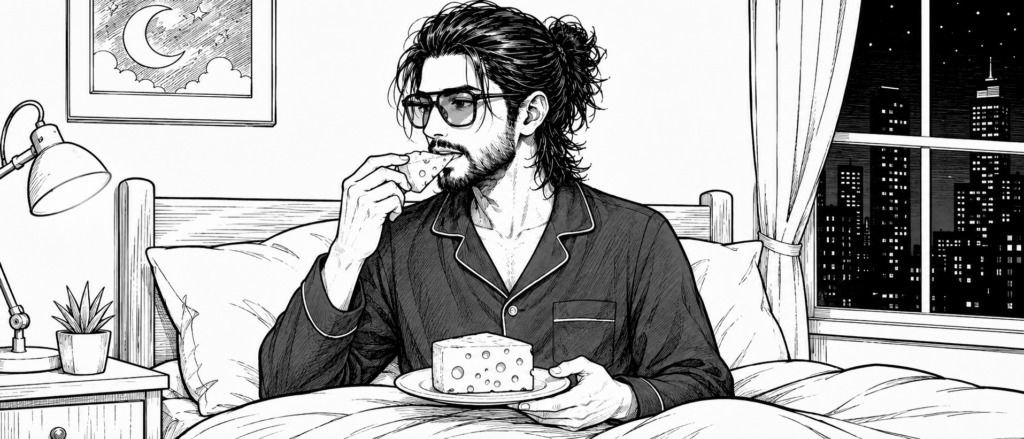
In 2005 the British Cheese Board tested this myth directly. They gave 200 volunteers 20 grams of cheese 30 minutes before bed for a week and had them record their dreams. Not one person reported a nightmare. Most said they slept well, and two thirds remembered their dreams the next morning.
So where did this idea come from, and is there any truth in it at all?
The myth is old. Charles Dickens blamed cheese for Scrooge’s ghostly visions in A Christmas Carol. A psychiatrist in 1964 even wrote up a case where a patient’s nightmares stopped once they cut out their nightly cheddar snack. The story has stuck around for over a century.
Why people believe it
Cheese contains two compounds that get blamed for strange dreams.
- Tryptophan. This amino acid helps your body make serotonin and melatonin, the hormone that regulates sleep. In theory it should help you sleep, not disturb it.
- Tyramine. This forms as cheese ages, so it shows up more in cheeses like blue cheese, aged cheddar, and stilton. Tyramine can trigger the release of noradrenaline, a brain chemical linked to alertness.
Both compounds are real, and both are present in cheese. But the amounts in a normal serving are small. There is no solid research showing they cause nightmares in a typical person eating a typical portion.
What might actually be going on
If cheese is not the direct cause, something else probably is.
Eating heavy or rich food close to bedtime slows digestion. Cheese is high in fat and protein, which take longer to break down than carbs. When your body is still working on digesting a big meal, your sleep can get lighter and more fragmented. That makes you more likely to wake up during REM sleep, which is when most vivid dreams happen. Waking up mid dream makes you remember it, nightmare or not.
There is also a more specific link worth knowing. A peer reviewed study published in Frontiers in Psychology, led by researcher Tore Nielsen, found that nightmare severity was strongly linked to lactose intolerance and other food sensitivities. If you are lactose intolerant, even mildly and without knowing it, dairy late in the day can cause bloating and cramping. That discomfort disrupts sleep and can feed into worse or more memorable dreams. This is likely the real story behind a lot of cheese and nightmare complaints, especially since many people carry undiagnosed lactose intolerance.
What to do with this
- Do not worry about cheese itself. There is no good evidence it causes nightmares in the average person.
- Watch the timing instead. Try to finish heavy or rich meals, cheese included, at least two to three hours before bed.
- Pay attention to how you feel after dairy. If you notice bloating, gas, or discomfort after eating cheese, especially at night, mild lactose intolerance could be the real driver of any bad dreams or restless sleep.
- If you love cheese before bed and never notice a problem, there is no reason to stop.
The bottom line
The 2005 cheese board study still stands as the clearest direct test of this myth, and it found nothing. The more likely explanation is simple. Heavy food and digestive discomfort disrupt sleep, disrupted sleep means more waking during dream stages, and more waking means more dream recall. Cheese just happens to be a common heavy food eaten late at night, which made it an easy thing to blame.
References
1. British Cheese Board (2005). Cheese and dreams study. Nielsen, T., et al. Frontiers in Psychology.
2. Nightmare severity and its association with lactose intolerance and food allergies. Biology Insights.
3. Does Cheese Actually Cause Nightmares? The Cheese Wedge Company.
4. Does Cheese Give You Nightmares? The Science Behind the Myth.